Signs of a hidden leak, in the order people usually notice them
Most leaks announce themselves long before a puddle appears. The trick is reading the small clues correctly, because several of them also have harmless causes. These are the signs that justify a call.
The water bill jumps with no change in habits
A steady drip of even a few gallons an hour adds up across a billing period. A bill that climbs without a houseguest, a new appliance or a garden project deserves a meter check.
A warm spot on the floor
Hot water lines that run under a floor can leak into the material above them. Bare feet often find the warm patch before any stain shows.
Musty smell or peeling paint
Moisture trapped behind drywall feeds mildew within days. Bubbling paint and soft baseboards point to water that has been there a while.
The sound of water when nothing is running
A faint hiss or trickle in a quiet house, especially at night, usually means pressurized water is escaping somewhere.
Low pressure at every tap
A pressure drop across the whole house can mean a leak upstream of the fixtures, often on the line from the meter.
Meter still moving with everything off: how to read it and what it means
The water meter is the most honest leak detector you own. If it keeps registering flow while every tap, appliance and irrigation zone is off, water is leaving the pipe somewhere. Here is the test most plumbers walk customers through.
Stop all use
Shut off taps, the washer, dishwasher and ice maker, and pause the sprinkler timer. Make sure nobody flushes during the test.
Find the indicator
Lift the meter box lid carefully and look for the small low-flow dial or triangle that spins at even the slowest flow. Write down or photograph the full reading.
Wait, then compare
Give it 30 to 60 minutes without using any water. If the numbers have changed or the small dial is still turning, you have a leak.
Split the line
Close the home's main valve and look again. If the dial stops, the leak is inside the house. If it keeps turning, the leak is on the buried stretch before the valve.
A toilet that refills on its own is the most common false alarm. Drop a few drops of food coloring in the tank, wait 15 minutes without flushing, and see whether color reaches the bowl. If it does, the flapper is leaking, and our toilet repair team can swap it.
Lakewood Water District owns the shut-off valve at the meter, so leave it alone. The district offers 24-hour emergency shut-off, and emergency shutoffs have no fee. The customer side starts at the meter, so the pipe from there to your building is yours to repair. A meter that keeps moving with the house valve closed is therefore a plumbing job, not a utility one.
Wet ceiling, stained wall or bubbling paint: tracing water to its source
Water follows gravity but also framing, wires and pipe sleeves, so the stain on a ceiling can sit several feet from the actual leak. A bathroom upstairs, a roof flashing, a condensate line from an air handler and a supply pipe in the wall can all leave the same brown ring. Our job is to sort those out before anyone cuts drywall.
We start with a moisture meter to map how far the damp reaches, then use a thermal camera to look for the cold signature of evaporating water behind the surface. Pressure testing the suspect supply line confirms whether it is the culprit. Often the result is a small, targeted opening instead of a torn-out wall.
If a ceiling is sagging or dripping, place a bucket, poke a small relief hole at the lowest point of the bulge to control the flow, and keep clear of the area. Never touch a wet light fixture. If the water is coming from a bathroom above, closing the supply stops at that fixture can slow it while you wait.
How we find a leak without guessing
| Method | What it finds | Limit |
|---|---|---|
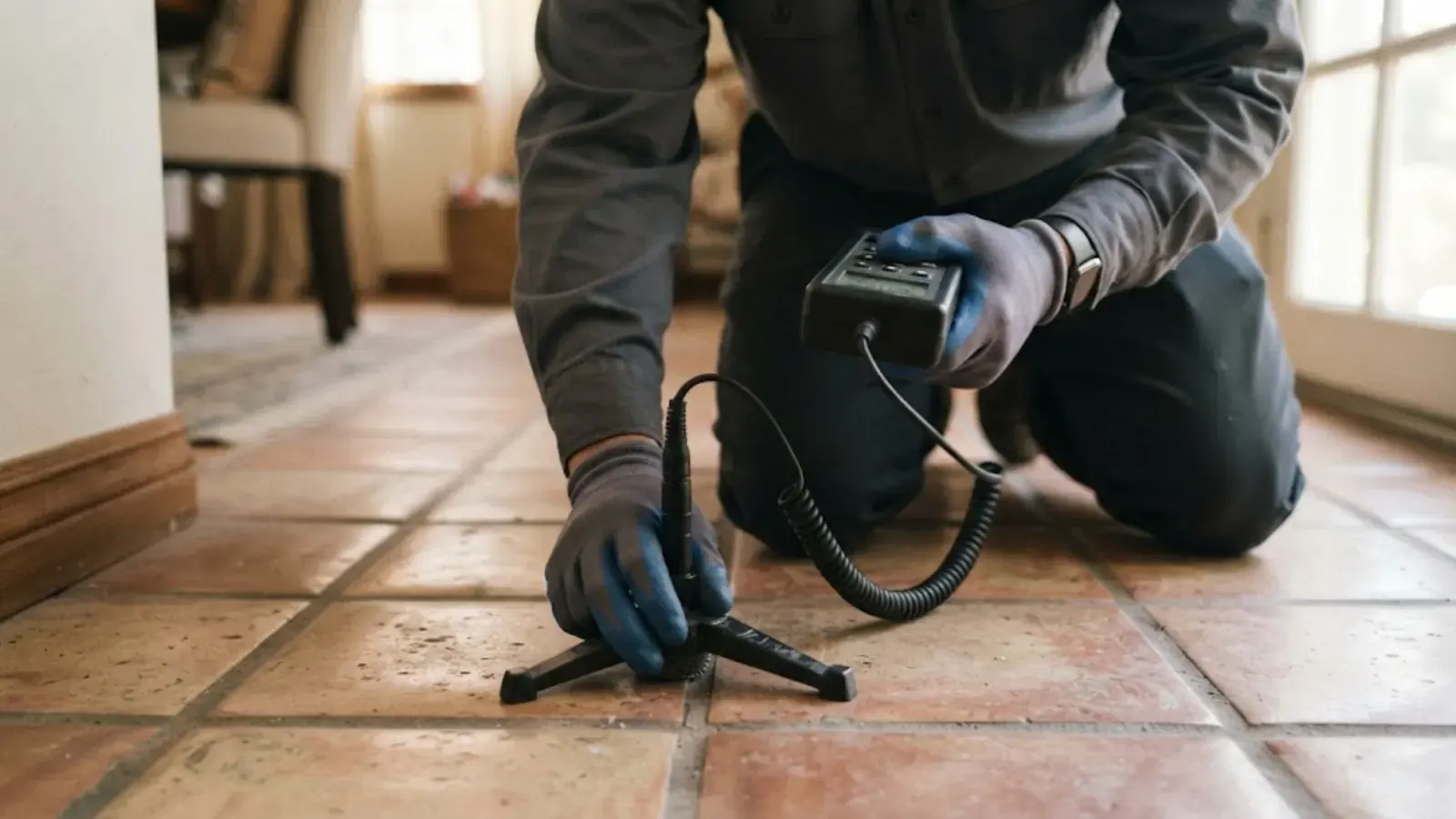
| Acoustic listening | The hiss of pressurized water in a pipe, slab or buried line | Background noise from traffic or pumps can mask a quiet leak |
| Thermal imaging | Temperature differences from wet material or hot water lines | Shows a zone, not an exact point, and needs a temperature contrast |
| Moisture meter | How far dampness has spread through drywall, wood or flooring | Reads moisture but cannot say whether it is old or still active |
| Pressure testing | Whether a section of supply line holds pressure when isolated | Confirms a leak exists in that section, not its exact spot |
| Tracer gas | Tiny leaks in lines where sound is weak, by releasing a harmless gas and sniffing for it | Needs access to the line and a short isolation of the water |
| Camera inspection | Cracks, offsets and intrusions inside drain and sewer lines | Only for drain-side leaks, not pressurized supply lines |
Most jobs use two or three of these together, because each one answers a different question.
If the camera points to a cracked sewer pipe rather than a supply leak, the next step is a sewer camera inspection report and then a repair estimate.
Under the house: crawlspace and subfloor leaks
A leak under the floor hides well because the space is dark, low and rarely visited. Signs include a rising bill, a sagging floor near a bathroom or kitchen, a rotten smell, dripping you can hear below, and mildew creeping along joists. Insulation hanging down and darkened wood are visible clues if you can safely look.
We check the supply lines with acoustic listening and a pressure test, then trace the drain lines. Because water under a house can invite rot and pests, fast attention matters, and we aim to schedule same-day appointments when available.
Do not crawl into standing water, because wiring and ducts often run through the same space. If your crawlspace floods, call and tell the dispatcher what you can see from the access hatch.
Buried pipe leaks between the meter and the house
The line from the meter to the building runs underground, and a leak there can go unnoticed for months. Signs include a soggy or unusually green strip of lawn, a wet spot with no rain, a meter that runs with the home valve closed, and sudden low pressure.
We locate the pipe, listen along its length, and narrow the leak to a few feet before anyone digs. Once found, the repair is covered on our water service line repair page, along with who is responsible for each stretch.
If your home has a slab: warm floors, hissing and mystery moisture
We do not assume anything about a home's foundation until we see it. If yours sits on a concrete slab, pipes may run through or under it, and a leak there shows up differently. Look for a hot patch on tile or carpet, a hissing sound at night, or damp baseboards along an exterior wall.
A slab leak call starts with turning off the water to see whether the meter stops. We then use acoustic equipment to listen across the floor and a thermal camera to confirm hot water lines. The repair options range from a spot repair through the slab to rerouting the line through the attic or walls, and we explain the trade-offs before the work.
If a slab leak has damaged several lines, a conversation about whole-house repiping may make more sense than a string of patches.
What affects the price of finding a leak
You get a clear price before work starts, once the dispatcher knows what the leak is doing and a plumber has looked at access.
- Where the suspected leak sitsA visible wall stain costs less to trace than a line under a slab or a long run of buried pipe.
- How many methods the search needsSome leaks give up their location to one listening pass. Others need thermal imaging and a pressure test.
- Access to pipes and shut-offsA working main valve and a clear crawlspace hatch shorten the visit. Blocked access adds time.
- Size of the areaA single bathroom is a small search zone. A whole house with a rising bill is a larger one.
- Repair after the findDetection and repair are separate steps with separate prices, and you decide on each.
Many homeowners policies cover sudden water damage but not the pipe itself or slow, ongoing seepage. Ask your insurer which applies, and keep photos and the leak report for the claim.
Describe the symptom and we will tell you the price before anyone starts.
(253) 275-5116Sprinkler lines, pools and the meter box
Irrigation and sprinkler leaks
A broken head, cracked lateral or stuck valve can run all night and add hundreds of gallons to a bill. Walk the zones, look for soggy ground and low-pressure heads, and check the control valve box. Some irrigation systems need annual backflow assembly testing, so ask your water utility whether yours does.
Pool and spa leaks
A pool that loses more than a normal amount of water in a week may have a leak in the shell, skimmer, or plumbing. Evaporation can fool you, so run a bucket test before calling. We can pressure-test the equipment lines, but we do not repair pool shells.
Yard and meter-box leaks
Water pooling in the meter box can come from either side of the meter. If the leak is on the utility's side, Lakewood Water District needs to fix it. If it is on the house side, the pipe is the homeowner's, and we can repair it.
Shut the main, document, then wait: what to do first
Do this while you wait
- Close the main shut-off valve inside the house
- Call the water district if you need shut-off at the meter
- Photograph the stain, the meter and any damaged belongings
- Move rugs, furniture and electronics away from wet areas
Please do not
- Touch light fixtures, outlets or appliances near water
- Cut into a wall or floor to look for the pipe
- Keep running taps to see whether the leak gets worse
- Ignore a ceiling that is sagging or bulging
Photographs help with an insurance claim, so take them before you clean up. If a pipe has split and water is pouring out, our burst pipe repair page covers the first steps in more detail.
Commercial leak detection: what to expect
Shops, offices and apartment buildings have longer pipe runs, more fixtures and often several meters. Finding a leak can take longer, and the owner, tenant and landlord may disagree on who pays. We handle detection work for small commercial properties and report what we find, but we are straightforward about what a first visit can and cannot settle.
Larger buildings with fire sprinklers, boilers or central plant often need specialists, and we will say so. Our commercial plumbing page lists what we take on.
Leak detection near you
We cover Lakewood in Pierce County, including Tillicum, Lake City, Springbrook and the streets around Fort Steilacoom Park. About 60 percent of Lakewood homes were built before 1980, so many have decades of wear on fittings and joints, and a pressure test can rule out slow seepage that a bill alone does not show. Neighbors in University Place can reach the same dispatch line.
Leak detection questions from Lakewood homeowners
Watch for a rising water bill, a hissing sound when nothing is on, a warm patch on the floor, damp or musty smells, and a meter that moves with everything off. Any one of these deserves a closer look. Two or more together almost always mean a leak.
Water is leaving the system somewhere. Check for a running toilet first, then close the home's main valve and watch the meter. If it stops, the leak is inside the house. If it keeps moving, the leak is on the buried line between the meter and your valve.
Yes. Our line is open 24/7, and a dispatcher can send a licensed plumber when water is actively damaging your home. Close the main valve first, photograph the damage, and tell us what you see so the right equipment is on the truck.
Lakewood Water District says the customer's responsibility starts at the customer side of the meter, so pipes from the meter to the building are the homeowner's to maintain and repair. The shut-off valve at the meter is utility-owned. If you are unsure which side a leak is on, call us and we will check.
Usually yes. Moisture meters, thermal imaging and listening tools narrow the search to a small area first. When an opening is needed, it is typically small and placed where the leak is confirmed.
We listen across the floor, use thermal imaging to follow hot lines, and pressure-test sections of pipe. Repair options include breaking into the slab at the spot, or rerouting the line, and we explain the choices and the price first.
It depends on the policy. Many cover sudden water damage but not the failed pipe or long-term seepage. Call your insurer, and keep photos and the detection report.