Toilet overflowing: the first minute matters
Do not flush again. Each flush sends another tank of water into a bowl that cannot empty, and the rim has very little room left.
- Take the lid off the tank and push the rubber flapper down to stop more water entering the bowl.
- Reach behind the toilet and turn the small oval-handled valve on the wall or floor clockwise until it stops.
- Lay towels around the base and keep children and pets out of the room.
- Stay away from outlets and power strips that sit in standing water.
- Call (253) 275-5116 if the water keeps rising or the valve will not turn.
If the valve is seized, which happens often on fixtures that have not been touched in decades, close the main shutoff where the water enters the house. The Lakewood Water District also runs a 24-hour emergency shut-off, and the district lists emergency shutoffs as free of charge.
When the bowl will not drain at all
A bowl that fills, rises slowly and stays full has a blockage somewhere past the trap. A plunger with a flange on the end, pushed straight down and pumped ten or twelve times, clears most single-toilet clogs.
If the plunger fails, or the tub and floor drain start gurgling when you flush, the clog is probably further down the line. That is a job for a cable or a camera, and our drain cleaning crews bring both. Water coming up in the lowest drain in the house points to the main sewer line, so stop all water use and call.
Why a toilet runs, hisses or refills on its own
A toilet that refills every few minutes with nobody home is leaking water from the tank into the bowl. The leak is quiet, so most people find it from the water bill or from the hiss at night.
Worn flapper
The rubber seal at the bottom of the tank hardens or warps, and water slips past it into the bowl.
Fill valve that will not shut
The tall float assembly keeps feeding water because a seal inside it is worn or grit is stuck in it.
Overflow tube set too high
Water spills into the vertical tube instead of stopping below it, and the fill valve never gets the signal to quit.
Chain too tight or too slack
A tight chain holds the flapper open a crack. A long chain tangles under it.
A quick test: add a few drops of food coloring to the tank and wait fifteen minutes without flushing. Color in the bowl means the flapper or flush valve seat is leaking. If the bowl stays clear but the tank keeps filling and water runs down the overflow tube, the fill valve or float height is the culprit.
A rocking toilet or a damp ring at the base
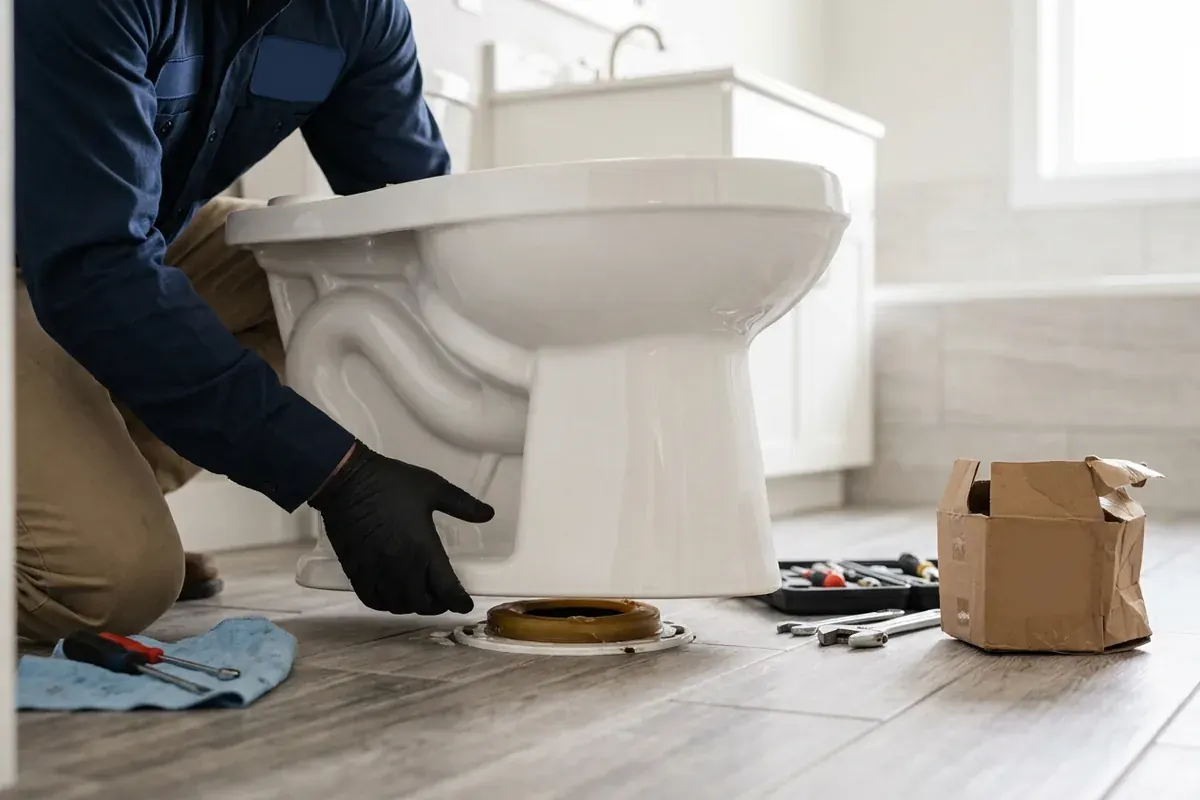
A toilet sits on a wax ring that seals the outlet to the closet flange, the pipe fitting bolted to the floor. When the toilet rocks, the ring compresses unevenly and begins to seep. The first sign is usually a damp spot on the vinyl or a soft floor near the base.
Resetting the toilet means shutting off the water, draining the tank and bowl, disconnecting the supply line and lifting the fixture off. We scrape the old wax, inspect the flange for cracks or corrosion, and set a new ring or a ring-and-sleeve seal.
A flange that sits below the finished floor, or a floor that has gone spongy from months of seepage, needs more than a new ring. We check the subfloor with a screwdriver before the toilet goes back down, because a new seal over rotted wood fails again.
Repair or replace: how we decide
| What we find | Usual call | Why |
|---|---|---|
| Worn flapper, chain or fill valve | Repair | Inexpensive parts, and the porcelain is fine |
| Loose or leaking base, sound flange | Reset with a new wax ring | The fixture is not the problem, the seal is |
| Hairline crack in the bowl or tank | Replace | Cracks open further and cannot be sealed reliably |
| Repeated clogs from a very old low-flow model | Replace | Parts will not fix a weak flush |
| Rust-stained or crumbling tank hardware, many parts failing at once | Replace | Repair visits add up to more than a new fixture |
We tell you which column your toilet falls in before we pick up a wrench.
Replacing a toilet, step by step
Measure the rough-in
Distance from the finished wall to the flange bolts is commonly 12 inches, though 10 and 14 exist. A new toilet has to match.
Check the flange and floor
We look for a cracked flange, a loose one, or soft wood, and fix those first.
Set the new fixture
A fresh seal, level bowl, snug closet bolts and a new braided supply line to the shutoff.
Test and flush
We run several flushes, look at every joint with dry paper, and check the shutoff valve turns.
Choosing the model matters more than most people expect. Look for the WaterSense label on the box, confirm the rough-in, and check bowl shape against your space: elongated bowls need about two inches more room than round-front ones. If the shutoff valve has stopped turning, we replace it during the swap, and the related fixtures are covered on our faucet and valve repair page.
Older homes, rentals and what that changes
Homes from the 1970s
The median Lakewood home was built in 1974. Shutoff valves that age often stick, so expect us to swap the valve while we are there.
More renters than owners
About 55 percent of Lakewood households rent. If you rent, tell your landlord first unless water is spilling, then close the valve and call us.
Larger projects, such as adding a bathroom or moving a toilet to a new wall, move into new-pipe work. Our plumbing installation page explains rough-in and inspection stages. A toilet that keeps clogging in an unexplained way is also a case for a sewer camera inspection, because the problem may not be in the toilet at all.
What changes the price of toilet work
You get a clear price before work starts. Toilet jobs range from a ten-minute part swap to a full replacement, so the first question is always what the toilet is actually doing.
- Parts versus fixtureA flapper or fill valve is a small job. A full replacement adds the toilet, supply line and possibly a new shutoff.
- Flange and floor conditionA sound flange is quick. A cracked flange or soft subfloor adds repair time.
- Shutoff valve conditionOld valves that will not close have to be replaced before anything else can be done.
- Toilet you chooseStandard bowls, comfort-height models and wall-hung units differ widely in cost and in labor.
- Time of dayNight, weekend and holiday visits are staffed around the clock, and we quote the price before dispatch finishes.
Homeowners insurance usually treats a worn part as maintenance. Water that damaged a floor or ceiling below may be covered, so photograph it before cleanup and read your policy.
Tell us what the toilet is doing and we will tell you the price.
(253) 275-5116Toilets in University Place and nearby
We handle toilet calls across Lakewood and in neighboring towns, including University Place, where the city's housing element notes a stock of small bungalows and cottages, so ask us to check the shutoff valve whenever a fixture is that old.
Flush volume limits
Federal rules cap new toilets at 1.6 gallons per flush, and many models carry the EPA WaterSense label at 1.28 gallons or less. A newer toilet that clogs often is usually a trapway or venting problem, not a sign that the limit is too low.
Before you buy, check the rough-in distance from the wall to the drain center, because the toilet has to match it.
Toilet questions we hear most
Yes. We are open 24/7, and a plumber can be sent when a toilet is overflowing or leaking into a lower floor. Close the valve behind the toilet while you wait, and keep people out of the wet room.
The usual causes are a worn flapper, a fill valve that does not shut off fully, or an overflow tube set too high. Try the food coloring test, and call us if the water level keeps cycling. A running toilet wastes water around the clock and shows up on the next bill.
For a few days, yes, but each use pushes more water past the seal. The longer a base leaks, the more likely the floor underneath will soften. Have it reset before it gets that far.
Many people do. The usual mistakes are a wrong rough-in measurement, an over-tightened bolt that cracks the base, and a flange that was never checked. If the floor around the old toilet is soft or the shutoff will not turn, call us instead.
Leases differ, so ask your landlord or property manager. If you rent, tell them in writing and take photos. We can give the person paying a clear price before work begins.
Swapping one like-for-like usually does not, but the city's building FAQ says a permit is needed before installing or altering a plumbing system. Confirm with the city permit center if you plan to move the toilet or add new pipes.