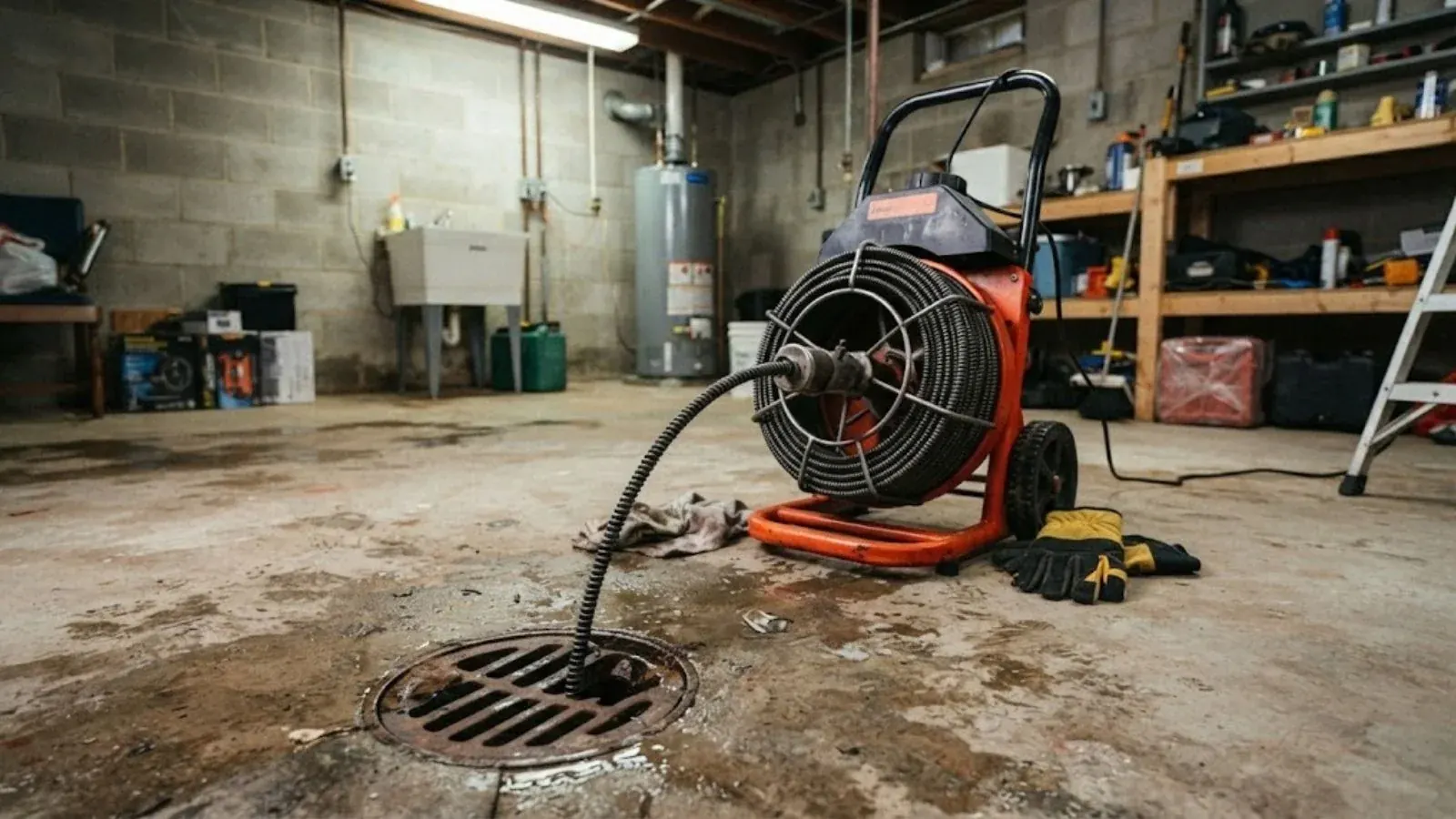
When a clogged drain is an emergency
Drain cleaning means clearing a blockage out of a sink, tub, floor drain or sewer line so water flows freely again. It turns into an emergency when water has nowhere to go. If wastewater is rising in a tub, gurgling in a toilet or pooling around a floor drain, call us now and we will dispatch at any hour of the day or night, weekends and holidays included.
While you wait, stop using water anywhere in the house. Every flush, shower or load of laundry sends more water toward a line that is already full. Keep children and pets away from standing wastewater, and move rugs or boxes off the floor around the drain.
Water rises in a second fixture
Run the washer and the tub gurgles or fills. That points to a blockage downstream of both, usually in the main line.
A toilet will not flush and a sink will not drain
One stopped fixture is usually a local clog. Two or three at once means the problem sits further down the line.
Sewage smell with slow drains
Gas and wastewater push back up when a line cannot carry flow away, and that smell is a sign to stop using water.
Water at a floor drain or cleanout
Wastewater showing at the lowest opening in the house means the line is backed up completely.
Why drains clog in Lakewood homes
Housing age sets the baseline. The median home in Lakewood was built in 1974, and roughly 38 percent of homes went up between 1960 and 1979, with another 23 percent before 1960, according to Census survey figures for 2019 to 2023. Drain lines in houses that old have had decades to collect scale, grease and roots, and some have sagged or cracked at the joints.
That does not mean your line is failing. It means a clog in an older home deserves a proper look instead of a quick pass with a cable. A camera tells us whether we are dealing with a one-time blockage or a pipe that will keep catching debris.
Tree roots are the other local factor. Pierce County gets about 42 inches of rain a year at the nearest weather station, and wet ground keeps roots hunting for the moisture and nutrients inside a sewer line. Where mature trees stand close to a property line, roots are a common reason a sewer line clogs again after it has been cleared.
A little more than half of Lakewood households rent, so many calls start with a tenant or a property manager. If you rent, tell your landlord first when it is safe to wait, and call us directly when water is rising and you cannot reach anyone.
Clog types we clear, and how we approach each
Kitchen sink clogs
Kitchen lines clog with cooking grease that cools into a paste, coffee grounds, rice and food that slips past the strainer. The sludge builds inside the pipe wall, so water slows for weeks before it stops. A cable usually opens the line, and when grease has coated the full run we follow with a jetter to clean the pipe wall.
If the sink shares a line with a garbage disposal or dishwasher, we check both. A jammed disposal and a clogged drain often show up as the same complaint, and our garbage disposal repair team handles the unit itself.
Bathroom sinks, tubs and showers
Hair and soap scum bind into a mat just below the drain opening. Pulling the stopper or strainer clears some of it, and a small cable gets the rest. When a tub drains slowly even after cleaning, the vent or the trap arm may be the real problem, and we trace it rather than clearing the same clog every few months.
Floor drains and laundry lines
Basement and garage floor drains carry lint, sediment and sometimes the overflow from a failing main. Laundry standpipes overflow when lint and soap build up in a trap that is too small for the washer's pump. We clear the line and check that the drain slopes properly to the main.
Main sewer lines
A main line clog backs up the lowest fixtures first. We clear it with a larger cable or with hydro jetting when roots or heavy buildup are involved, then run a camera to see what caused it. If the camera finds a broken or collapsed section, the next step is a sewer line repair estimate with a clear price before any digging starts.
Snaking, jetting and camera checks compared
| Method | Best for | Limit |
|---|---|---|
| Cable or snake | Single clogs in sinks, tubs and short runs | Punches a hole through buildup but leaves the pipe wall coated |
| Hydro jetting | Grease, scale, sludge and roots in larger lines | Needs access through a cleanout and a sound pipe |
| Camera inspection | Finding the cause when clogs keep coming back | Shows the problem but does not clear it |
Most calls start with a cable and move to jetting or a camera only when the first pass shows a reason to.
We name the method before we start and explain why. If a cable will do the job, you will not be sold a jetting visit. If the line keeps clogging, a sewer camera inspection shows what is happening inside the pipe so the fix matches the cause.
What affects the cost of drain cleaning
We give you a clear price before work starts, after we have seen the drain or talked through the symptoms. Drain work is not one flat number because the same complaint can come from very different problems.
- Where the clog sitsA fixture trap is a short job. A main line blockage 60 feet from the cleanout takes longer and more equipment.
- What is causing itSoft buildup clears quickly. Roots and hardened grease need heavier tools or jetting.
- Access to the lineA working cleanout speeds the job up. Without one, we may need to pull a toilet or work from the roof vent.
- Camera workAdding a camera pass to find the cause is a separate step, and you can choose whether you want it.
- Time of dayNights, weekends and holidays are staffed around the clock, and after-hours visits are priced before we come out.
Most homeowners policies treat a plain clog as maintenance, though water damage from a sudden sewer backup can fall under optional coverage. Check your policy, and photograph any damage before cleanup begins.
Tell us what the drain is doing and we will give you a real number.
(253) 275-5116What happens when you call
Call and describe it
A dispatcher asks which fixtures are affected and whether water is rising, then sends a plumber.
Quick look
The plumber checks the fixtures and the cleanout to decide where the blockage sits.
Price, then work
You hear the price and the method before the cable goes in.
Clear and test
We run water to confirm the line drains and tell you if a camera check is worth doing.
Store-bought drain openers: what to know first
Usually fine to try
- A plunger on a single sink or tub
- Pulling the pop-up stopper to remove hair
- Hot water flushed after you clean a kitchen strainer
Call a plumber instead
- Two or more fixtures backing up together
- Gurgling toilets or sewage smell
- A clog that returns within weeks of clearing
Chemical drain openers can sit in a blocked pipe and make the job riskier. They can burn skin, damage some pipe materials, and they leave a hazard for the plumber who opens the trap afterward. If you have already poured one in, tell the technician on arrival.
Who is responsible for which part of the line
In Lakewood, sewer service is provided by Pierce County Public Works and Utilities. The county's guidance says the homeowner is responsible for the sewer line from the house to the public line. That means a blockage in your side sewer is yours to clear, even if the cause is a root growing in from a street tree.
If our camera shows the problem is in the public main, we tell you so and show you the footage. That keeps you from paying to repair a pipe you do not own.
Washington requires anyone doing plumbing work for hire to be certified through the state's Labor and Industries department. You can look up any plumber or contractor with the state's online verify tool before you hire them.
Drain cleaning near you
We answer drain calls across Lakewood, including Tillicum, Springbrook, Oakbrook, Lake City and the streets around Lakewood Towne Center and Pierce College Fort Steilacoom. Neighbors in University Place and Steilacoom get the same 24/7 dispatch from our Lakewood base.
Drain cleaning questions from Lakewood homeowners
Yes. Our line is open 24 hours a day, every day, and a dispatcher sends a plumber when a drain is backing up, a toilet is overflowing or water is rising in a tub. Tell us which fixtures are affected so the right tools are on the truck.
Grease and food waste build up on the pipe wall until only a thin channel is left. A cable can reopen that channel, but the coating remains. If the sink clogs again within a few weeks, ask for jetting or a camera look to see how much of the line is coated.
Usually not. A plain clog is treated as maintenance. Damage from a sudden backup may be covered if you carry sewer backup coverage, so read your policy and call your insurer before you start cleanup.
It is better not to, especially if more than one fixture is slow. The chemical can sit in the pipe, harm some materials and endanger whoever opens the trap next. A plunger or a hand-held drain tool is the safer first try.
Your side sewer from the house to the public connection is your responsibility under Pierce County's guidance. If the camera shows the blockage is in the county main, we will tell you and show you what we found.
Yes. Landlords, tenants and shop owners all call us. We give the person who is paying a clear price before the work starts, and our commercial plumbing page covers restaurants and larger buildings.