Five signs the pipes are wearing out
Brown or orange water
Rust-colored water at the tap, especially in the morning, can come from corroded steel pipe. A water heater can also cause it, so we check there first.
Pressure that keeps falling
Mineral and rust buildup narrows the inside of older pipe until flow is a trickle, even with fully open valves.
Pinhole leaks that keep coming back
One leak is a repair. A second and third in different places is a pattern.
Flaking or rough pipe
Pipe exposed in a basement or utility room that scales, flakes or looks crusty is wearing from within.
Taste or smell changes
A metallic taste can signal corrosion, though it can also come from the water source. Test your tap.
Any one sign can have a smaller cause, so we rule out a water heater, a regulator and a single bad fitting before recommending a full repipe.
Repair or repipe: a decision grid built on house age
Housing age is a useful, if blunt, guide. In Lakewood, the Census survey puts the median home at 1974, with 22.6 percent built before 1960 and 37.8 percent between 1960 and 1979. Pipes in those homes have had decades of service, which raises the odds of wear.
That does not tell us what is inside your walls. Some older homes were repiped years ago, and some newer ones have problems. Material and condition decide the answer, and a plumber identifies both.
| What you see | Leaning toward repair | Leaning toward repipe |
|---|---|---|
| Leaks | One, with sound pipe around it | Several, in different places |
| Water quality | Clear and steady | Discolored, especially after sitting |
| Pressure | Fine at most fixtures | Weak and getting worse |
| Pipe condition at cuts | Clean, smooth inside | Scale, thin walls, narrowed bore |
| Plans for the house | Selling soon, minor issue | Staying, or renovating walls anyway |
If you are remodeling a bathroom or kitchen, the open walls can lower the effort of replacing pipe at the same time.
PEX or copper: what the plumber weighs
PEX is flexible plastic tubing that bends around corners, so it needs fewer fittings and fewer wall openings. Copper is rigid metal with soldered or pressed joints, and it has a long history in homes. Both are accepted under the Uniform Plumbing Code, which Washington enforces in its 2021 edition.
We pick based on the layout of your house, your access, your preferences and what the inspector expects. We explain the trade-offs rather than pushing one product.
Galvanized pipe: why replacement beats patching
Galvanized steel pipe is coated in zinc, and over time the coating wears and the steel corrodes from the inside. The pipe narrows while the outside can still look fine. That is why pressure drops and discoloration can appear long before a leak.
If a plumber finds galvanized pipe in your house, replacing it is usually a better investment than patching. Mixing new pipe with old steel can also speed corrosion at the joints. We cannot say whether your home has galvanized pipe until we see it.
How a repipe is staged, room by room
Walk-through and plan
The plumber maps the fixtures, finds the main shut-off and chooses routes for the new lines.
Shut-off and open walls
Water is turned off, and small access openings are cut near fixtures and along the routes.
New lines in, old lines out
New pipe is run, connected to each fixture, and the old pipe is capped or removed.
Pressure test and inspection
The system is tested for leaks, and the inspector reviews where a permit applies.
Work often goes zone by zone, so water can be restored to part of the house in between. The plan depends on your house and the crew.
Walls, drywall and living at home during the work
Opening walls is the part homeowners worry about most. In many houses, access can come from closets, attics, crawlspaces or basements, which keeps drywall cuts small. When walls have to open, the cuts are patched, and finishing paint is usually a separate step.
Most people stay in the house, though you should expect some days with water off for part of the day. We discuss that with you in advance, plan around bathrooms and the kitchen, and give no promises about timing before seeing the house. Keep a supply of drinking water and plan meals accordingly.
Move belongings away from walls, protect floors, and arrange for pets. If you are also dealing with an active leak, our burst pipe repair page covers the immediate steps.
Permits, inspections and lead advice
The City of Lakewood says it is not a full-service permit agency. Its building FAQ says a permit is required before installing, altering, repairing or replacing a plumbing system, with an inspection scheduled about 24 hours ahead. Confirm with the city permit center how that applies to your repipe.
Lakewood Water District advises that homes built before 1985 may have lead pipes or solder. After a repipe, flush the taps, and run 6 to 8 ounces through brass faucets. The buried line from the meter is a separate job, covered on the water service line repair page.
What shapes the price of a repipe
You get a clear price before work starts, after a plumber has seen the house. No two repipes are alike.
- Size and layoutMore bathrooms, more floors and longer runs mean more pipe.
- Pipe materialPEX and copper differ in material cost and labor.
- AccessOpen crawlspaces and attics are easier than finished walls.
- Drywall and finishingPatching, painting and flooring repairs may be separate.
- Fixtures and valvesReplacing old shut-offs while walls are open adds a small cost but saves a later visit.
Insurance seldom pays for a planned repipe. It may help when a sudden leak damages the house.
Tell us what you are seeing and we will say what we would check.
(253) 275-5116Repiping across Lakewood and nearby towns
We plan repipes for homes in Lakewood, Pierce County, from Tillicum to Oakbrook. Owners in University Place get the same walk-through. Renters should talk to the landlord first, since the pipes are part of the building.
Tubing standards you can check on the pipe
Pipe sold for potable water carries printed markings. PEX tubing is made to ASTM F876 and copper tube to ASTM B88, and the marking on the pipe shows which standard it meets.
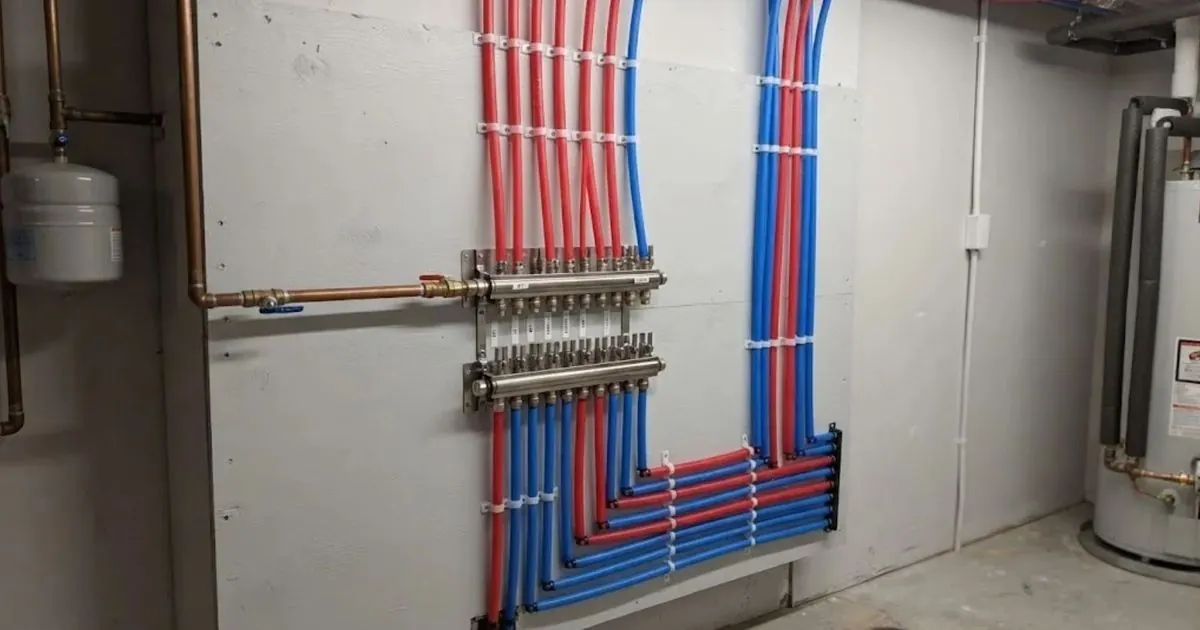
Ask to see the printed markings before the tubing goes into the wall, and ask which fittings and manifold the plumber plans to use.
Repiping questions
Not always. A single leak in sound pipe is a repair. Several leaks, discolored water or weak pressure across the house often point toward repiping. A plumber looks at the pipe first.
It is gray and threaded, and a magnet sticks to it. Copper looks brown, and plastic is white or colored. Check exposed pipe near the water heater or meter, or ask a plumber.
Both are accepted by code. PEX is flexible and quick to run, while copper is rigid and long established. The right choice depends on the house.
Many people stay. Expect some interruptions to water and plan for them. We discuss the schedule after seeing your house.
The city's building FAQ says a permit is required for altering or replacing a plumbing system. Confirm with the city permit center.
We patch access openings. Painting and finishing are often handled separately, and we tell you before work starts.