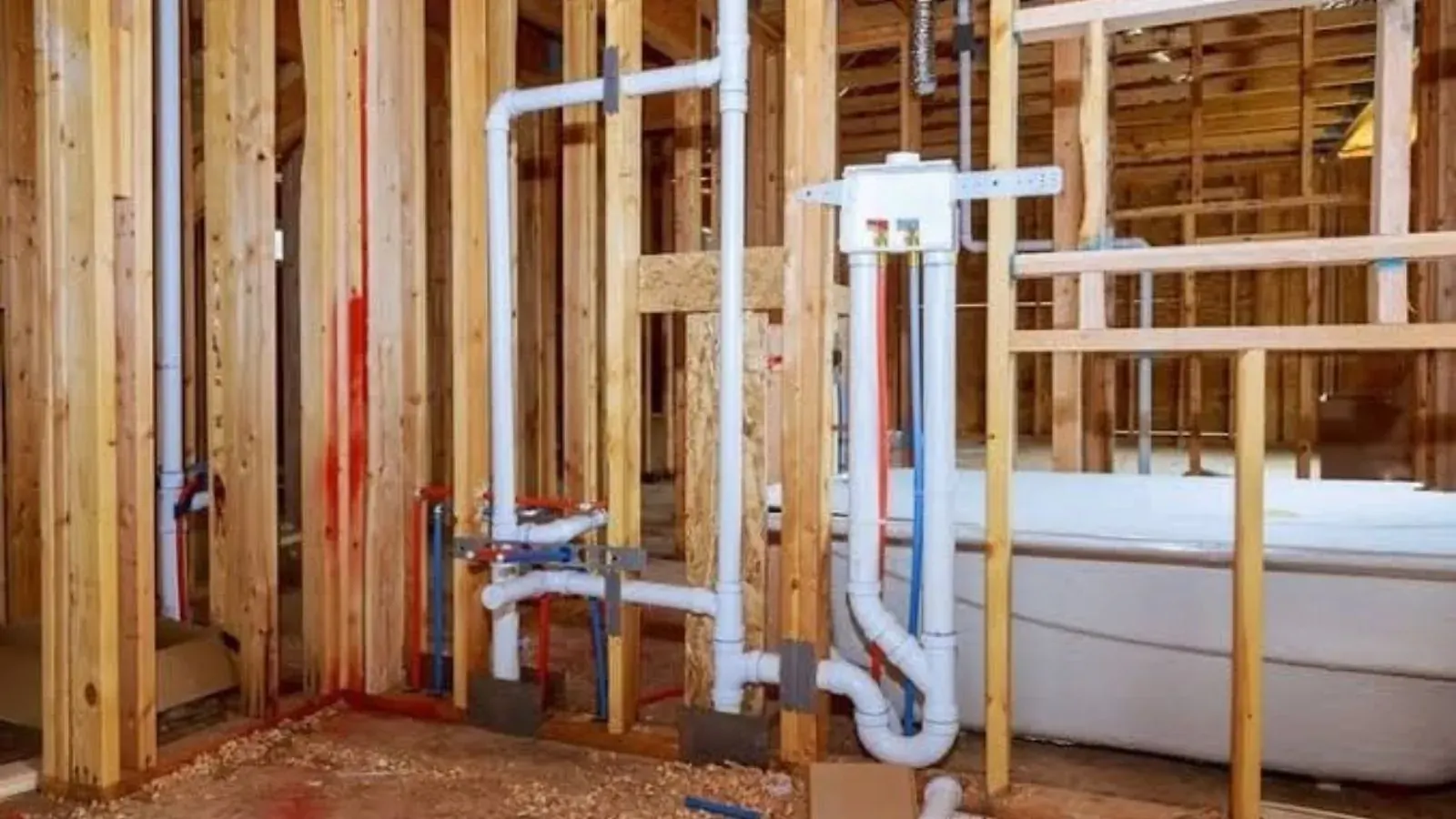
Two stages: rough-in and finish
Most installs happen in two visits that are weeks apart. The first happens while walls and floors are open, and the second after drywall, tile and cabinets are in.
| Stage | What happens | Inspection |
|---|---|---|
| Rough-in | Drain, waste, vent and supply pipes are set inside walls and floors | Pipes stay visible until inspected |
| Pressure check | The system is tested so leaks show before the walls close | Often checked at the same time |
| Finish | Toilets, faucets, sinks, tubs and appliance connections are set | Final inspection if required |
The city's building FAQ says inspections are scheduled about 24 hours ahead. Confirm timing with the permit center.
What we install
- KitchensSinks, faucets, disposals, dishwasher hookups, pot fillers and icemaker lines.
- BathroomsToilets, vanities, tubs, shower valves and drain relocation.
- LaundryA box with hot and cold valves, a standpipe and a drain, sized for the washer.
- Outdoor spigotsFrost-free hose bibs that shut off inside the wall, which matters where a nearby weather station averages about 21 days a year at or below freezing.
Older Lakewood homes often need a little extra to bring new fixtures into old walls. The median home dates to 1974, and a cut-in to an existing line may reveal a corroded valve or fitting that needs replacing at the same time.
Remodels, additions and ADUs
A remodel that moves a sink or toilet means new drain slope and venting. Drains need a steady fall toward the main, and every fixture needs a vent to move air so water does not siphon the trap.
An addition or accessory dwelling unit adds fixtures that must connect to the existing supply and the sewer. That means sizing the water line for the new load and finding where the new drain will tie in.
If the project involves new water heating, see our water heater installation page. Sewer connection questions sit with the county, and if the existing line is old, a camera inspection before you build can avoid a surprise.
Water filtration add-ons
A filter or softener should start with a question: what is in your water? Test your tap, or ask the Lakewood Water District for its annual water quality report. We do not state hardness for any address.
A filter under the sink for drinking water is a small install. A whole-house system needs space, a drain and sometimes a bypass. Choose the system for the problem the test finds, not for a sales pitch.
Gas lines are not part of this page
Gas line work belongs to a licensed professional and to Puget Sound Energy, which is the gas provider in Lakewood. We do not give gas steps here. If you smell gas, leave the building immediately, then call PSE or 911 from outside, before calling us.
Permits, code and checking your plumber
Washington enforces the 2021 Uniform Plumbing Code with state amendments, effective statewide since March 15, 2024. The City of Lakewood says it is not a full-service permit agency, and some sewer, water, electrical and fire-safety work goes through outside agencies.
The city's building FAQ says a permit is required before installing, altering, repairing or replacing a plumbing system. Confirm with the city permit center what applies to your job.
Anyone doing plumbing work for hire in Washington must be certified by the state Department of Labor and Industries. You can use L&I's online verify tool to check a plumber's certification and a contractor's registration before you agree to anything.
Getting the work area ready
- Clear the spaceEmpty vanities, under-sink cabinets and the area around the water heater.
- Find the mainKnow where the shutoff is and make sure it turns.
- Protect floorsLay drop cloths where work will cross finished surfaces.
- Plan for water offTell everyone in the house when the supply will be off.
What shapes installation pricing
You get a clear price before work starts. Installs are priced by scope, not by guesswork.
- Scope and fixture countMore fixtures and longer runs take more pipe and time.
- Wall and floor accessOpen framing is quicker than cutting into finished surfaces.
- Distance to main linesA bathroom far from the supply or sewer needs more pipe.
- Fixture choiceYour selections affect both materials and set-up time.
- Permits and inspectionsSome work needs a permit and a visit from an inspector.
Insurance generally does not cover planned upgrades. If a leak is discovered during a project, ask your insurer about that separately.
Tell us what you are building and we will give you a price.
(253) 275-5116Projects near Lakewood
We schedule installs across Lakewood and in DuPont, where Northwest Landing and the Historic Village have different building eras. Ask about the age of your home when you call, since it affects what we find behind the walls.
Permit and code points for new work
Washington enforces the Uniform Plumbing Code (UPC), 2021 edition. The city's building FAQ says a permit is required before installing, altering, repairing or replacing a plumbing system, and the city says it is not a full-service permit agency.
Confirm with the city permit center which office handles your project before work starts, so nothing has to be opened up again for an inspection.
Questions about plumbing installation
Rough-in is the pipe inside walls and floors, done before they are closed. Finish is setting fixtures after surfaces are complete. Each stage may have its own inspection.
The city's building FAQ says a permit is required before installing or altering a plumbing system. Confirm with the city permit center for your project.
Use the L&I Verify a Contractor, Tradesperson or Business tool. It shows certification, registration, workers comp and bond lawsuits.
Yes. New bathrooms and laundry connections need supply lines, a drain with proper fall and venting. The existing system is checked first to see if it can carry the load.
Test your tap first, or ask the Lakewood Water District for its annual report. Pick a filter for what the test shows.
Gas work belongs to licensed professionals and to PSE. Contact PSE about service, and leave the building if you ever smell gas.