Why the bottle rarely reaches the clog
A main line is a three or four inch pipe that may run 50 feet or more underground. A cup of liquid poured at a toilet or tub spreads out, thins and settles at the first low spot, long before the real obstruction.
Grease, roots and flushed wipes also hold up better than the product. A cleaner may eat a thin film of hair or soap, but a plug of roots or a collapsed section stays exactly as it was.
If the line is full, the chemical sits in standing wastewater and dilutes. You have then added a hazard without adding any cleaning power.
What drain chemicals do to pipes and people
Caustic cleaners
Lye-based products generate heat as they react. In a pipe that is not moving, that heat can soften plastic joints and stress older materials.
Acid cleaners
Strong acids attack metal fittings and can harm seals and trap parts. They are not meant for every pipe.
Mixing products
Pouring one cleaner after another can release toxic fumes. Never combine drain products.
Harm to the next person
A plumber who opens a trap full of caustic liquid risks chemical burns. Tell us what you used before we start.
Septic systems
Harsh chemicals can disturb the bacteria a septic tank relies on.
Signs the clog is in the main, not one fixture
- Two or more fixtures slow or back up at once, especially the lowest ones such as a basement shower or floor drain.
- Flushing a toilet makes a tub or shower gurgle or rise.
- Running the washer sends water up a nearby drain.
- A sewage smell near a floor drain or the yard cleanout.
- The problem returns within days of a plunger fix.
One slow sink is almost always local. Our drain cleaning team handles those with cables, while multi-fixture trouble is a sewer line cleaning job.
Safer first steps while you decide
Stop adding water
Hold off on laundry, dishwashing and long showers. Every gallon has nowhere to go.
Protect the floor
Move rugs and boxes away from the lowest drain, and keep children and pets back from standing wastewater.
Use a plain plunger once
A toilet plunger or a basic hand auger on a single fixture is fine for a local clog. If other fixtures react, stop.
Call and describe the pattern
Tell us which fixtures are affected and whether you used any chemical.
If you find your cleanout, do not open it when water is rising, since the pressure can send sewage into your yard or onto you.
How a plumber clears a main line
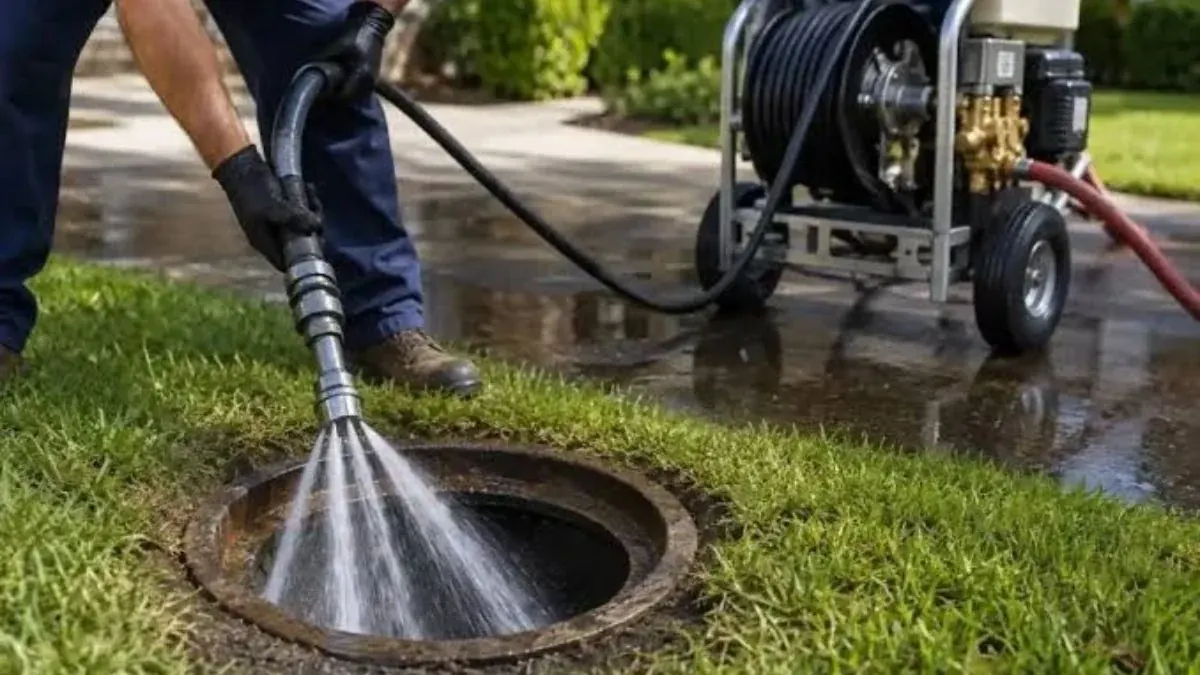
We usually start with a motorized cable that has a cutting head sized for the pipe. It opens a channel through roots and buildup and gets water moving. For grease or heavy scale, hydro jetting scours the pipe wall with high-pressure water instead of just poking a hole.
A camera follows to find the cause. A sewer camera inspection shows roots, a sag, a cracked joint or a collapsed section, so you know whether the clog will come back.
| Method | Good for | Limit |
|---|---|---|
| Store-bought cleaner | Thin film in a single drain | Rarely reaches or moves a main line clog |
| Cable with cutting head | Roots, soft blockages | Leaves the wall coated |
| Hydro jetting | Grease, scale, heavy buildup | Needs a sound pipe and access |
| Camera inspection | Finding the cause | Diagnoses but does not clear |
What affects the cost of clearing a main line
Price depends on the method and on what the camera finds. We quote a clear price before work starts.
- Access: a cleanout makes the job faster than pulling a toilet.
- Length and depth of the line, and the pipe size.
- Roots or grease, which call for different tools.
- Whether a camera inspection is added.
- After-hours timing, since sewage backups are emergencies.
Who is responsible for the sewer line in Lakewood
Sewer service in Lakewood is almost entirely provided by Pierce County Public Works and Utilities. Tacoma serves the Flett subdivision and parts of northeast Lakewood, so check which utility serves your street.
Pierce County says the homeowner is responsible for the sewer line from the home to the public lines. That means a clog or break in your side sewer is your repair, and the camera footage helps show where the problem sits. A repair in the line may need a side sewer permit, which goes through the county's online permitting system, review and inspection.
Some homes remain on septic. Tillicum and Woodbrook were on septic until county sewer arrived in 2011 and 2012. Septic owners handle all their own maintenance, so skip harsh chemicals there.
Source type: county page and city FAQ.Main line calls across the area
We dispatch sewer crews in Lakewood and to University Place, Fircrest, Steilacoom and DuPont. Tell us if sewage is rising so the right equipment goes out first.
Main line clog questions
Enzyme products work slowly on thin organic film and are gentler on pipes. They will not break up roots or a solid blockage.
Yes. Wastewater in your house is a health hazard, so stop using water and call right away.
A cause is still in the pipe. Roots, a sag or a cracked joint will re-trap debris, which a camera inspection can reveal.
Pierce County handles its public lines. Our camera work shows where the blockage sits, so the right party is called.
It can soften grease in a short run but can crack some fixtures and warp plastic traps. It also will not reach a main line clog.