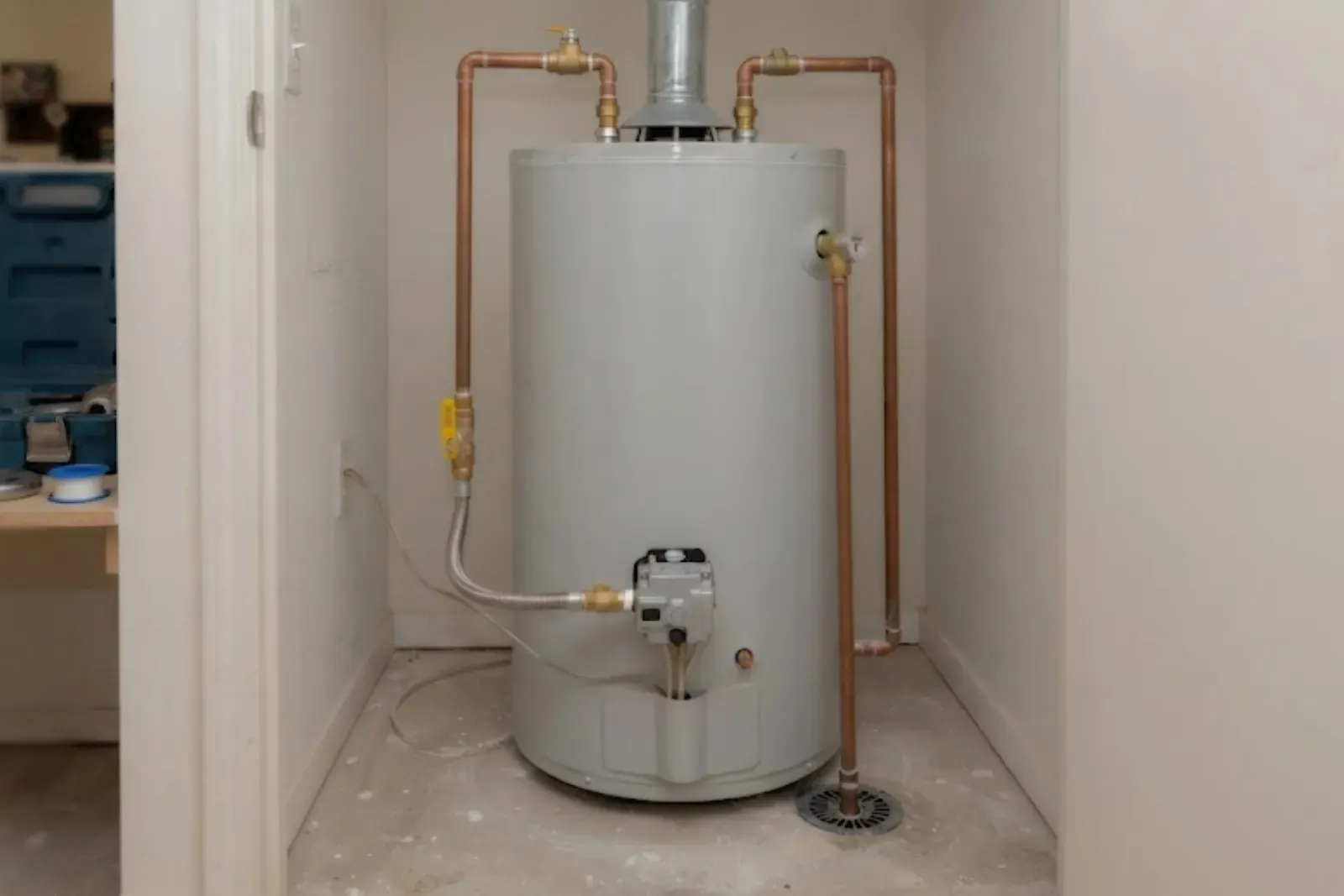
Four reasons people plan an installation
- New constructionA new build or addition needs a heater sized for the finished house, with the gas line, vent or circuit roughed in before drywall.
- RelocationMoving a heater out of a hall closet or garage corner gives better access and sometimes shorter hot water runs.
- Fuel switchChanging from electric to gas, or from gas to a heat pump, changes the vent, gas piping and wiring.
- UpgradeGoing to a larger tank, higher efficiency or a tankless model before the old one fails.
Each starts with a visit to look at the space, the existing connections and how the household uses hot water. For a broader remodel or addition, our plumbing installation page covers the wider scope.
Gas or electric: what the fuel choice changes
Puget Sound Energy is the exclusive natural gas provider in Lakewood. If you want a gas heater, the first question is whether gas is already piped to your home and to the location you want. A gas heater also needs a vent path and enough combustion air.
Electricity depends on the neighborhood. It generally comes from Tacoma Power in the north, Lakeview Light & Power in the east and Puget Sound Energy in the west. Check your power bill, since the provider affects rates and whether the utility has any programs for efficient heaters.
| Fuel | What the install involves | Good fit when |
|---|---|---|
| Natural gas | Gas piping, a vent, combustion air and a gas shutoff | Gas is already at the house and a vent path exists |
| Electric tank | A dedicated circuit and breaker sized by an electrician | No gas service, or a closet with no vent route |
| Hybrid heat pump | Circuit, condensate drain and room for airflow | Good clearance and a space that can handle the cool air it produces |
Electrical circuit work is done by a licensed electrician, and gas piping is done by a licensed plumber.
Venting, in plain terms
A gas heater needs a way to carry exhaust out of the house, and the vent type depends on the model. Atmospheric models use a metal flue that rises to the roof. Power-vent and direct-vent models use fans and can exit through a side wall.
We check the vent run, its slope and condition and the clearances before installing. If your old flue is corroded or does not suit the new tank, we explain what has to change. We do not quote vent sizes here since they depend on the model you choose and its manual.
Seismic strapping and relief valve piping
Washington enforces the 2021 Uniform Plumbing Code with state amendments. State code requires water heaters to be anchored or strapped against horizontal displacement. Straps go in the upper and lower thirds of the tank, and the lower strap sits at least 4 inches above the controls.
The relief valve discharge piping may not have isolation valves, and may not discharge into the heater pan. We plan the discharge route to meet that rule when we choose the tank location.
The expansion tank question
A thermal expansion tank is a small tank that absorbs the extra volume when water is heated in a closed system. It is a common topic during installs, so you may hear about it. Whether your home benefits depends on the plumbing setup, and the installer evaluates the system, including whether a check valve or pressure reducing valve is on the supply.
We do not claim it is required for every home. If your system calls for one, we explain why and include it in the price before work starts.
Permits and inspection
The city's building FAQ says a permit is required before installing or replacing a plumbing system and for installing or replacing a water heater. It also says inspection is scheduled about 24 hours ahead. Lakewood is not a full-service permit agency, so confirm with the city permit center how your job is handled.
That matters for planning. A new install in a remodel may involve other trades and other agencies, such as electrical permits handled outside the city. We tell you what permits the project involves before we begin.
New construction plumbing for the heater
In a new build or addition, the heater location is chosen early because the gas line, vent, drain pan, relief valve discharge and a floor drain or exit route need to be planned together. A tank in a finished closet with no drain is harder to protect from a leak. We coordinate with the general contractor and the electrician so the rough-in is ready.
Rentals and multifamily buildings follow the same rules. The city's 2024 comp plan says over half of its newest housing is multifamily. If you manage several units, call and we will go over a schedule. Neighbors in Fircrest and DuPont can book the same planned visits, though permit rules differ by town, so ask the city.
How a planned install is scheduled
- Decide on fuel and sizeHave your gas or electric details, bathroom count and any wish for a smaller or larger tank.
- Clear the spaceMove stored items from around the heater and the path to it so the plumber can work.
- Know your shutoffsFind the main water shutoff and tell the plumber where the breaker panel is.
- Plan your dayHot water will be off during the swap, so schedule showers and laundry around it.
Site visit
We look at the space, the vent and the connections.
Price and plan
You hear a clear price and the schedule.
Install
The tank is set, connected, strapped and tested.
Inspection
We arrange the permit inspection where the city requires it.
Checking your installer
Washington requires anyone doing plumbing for hire to be certified through the state Department of Labor and Industries. Use the state's online Verify a Contractor, Tradesperson or Business tool to check registration, certification, workers comp and bond lawsuits. We are licensed and insured, and you should verify anyone you hire.
What affects the cost of a water heater installation
We give you a clear price before work starts. A planned install has more variables than a swap.
- Tank type and sizeGas, electric, hybrid and tankless cost differently.
- Distance to servicesA longer gas line, vent or circuit run adds material and labor.
- Venting changesA new vent route or a conversion from an old flue adds work.
- Code and safety itemsStraps, discharge piping, pan, valves and any pressure control.
- Permits and other tradesPermit fees are set by the agencies involved, and electrical work is separate.
Planned upgrades are normally not covered by homeowners insurance. If you are replacing a heater after a loss, ask your insurer what applies.
Call and we will talk through the project and the price.
(253) 275-5116Where code shapes a new installation
Several details in a new install come from the Uniform Plumbing Code (UPC), 2021 edition, rather than from the plumber's preference. These include the relief valve discharge pipe, the clearances around the unit and the strapping that holds the tank upright.
If your home has a check valve or pressure reducing valve on the supply, the water system is closed. In that case the code calls for a thermal expansion tank, so ask whether one is needed.
Water heater installation questions from Lakewood homeowners
Choose the heater location early. Decide on fuel and size, and tell your builder so the gas line, vent or circuit can be roughed in. We coordinate with the other trades on site.
The rough-in covers water supplies, the gas line or electric circuit, a vent path, a relief valve discharge route and the drain or pan. A final connection and test follow once the heater is set.
It depends on the plumbing setup. The installer evaluates whether your supply has a check valve or pressure reducing valve and whether an expansion tank makes sense. We do not claim it is required for every home.
Often yes, if gas service reaches the home and a vent path exists. PSE is the gas provider in Lakewood. We check the gas line, vent and clearances first, and we tell you if the job is not practical.
The city's building FAQ says a permit is required for installing or replacing a water heater. Confirm with the city permit center. We tell you what the job needs before we begin.
Use the Washington Department of Labor and Industries online verify tool. It shows registration, certification, workers comp and bond lawsuits.
Yes, within the limits of the vent, gas, water and drain routes. We review the new location during a visit and tell you if the route makes the project costly.