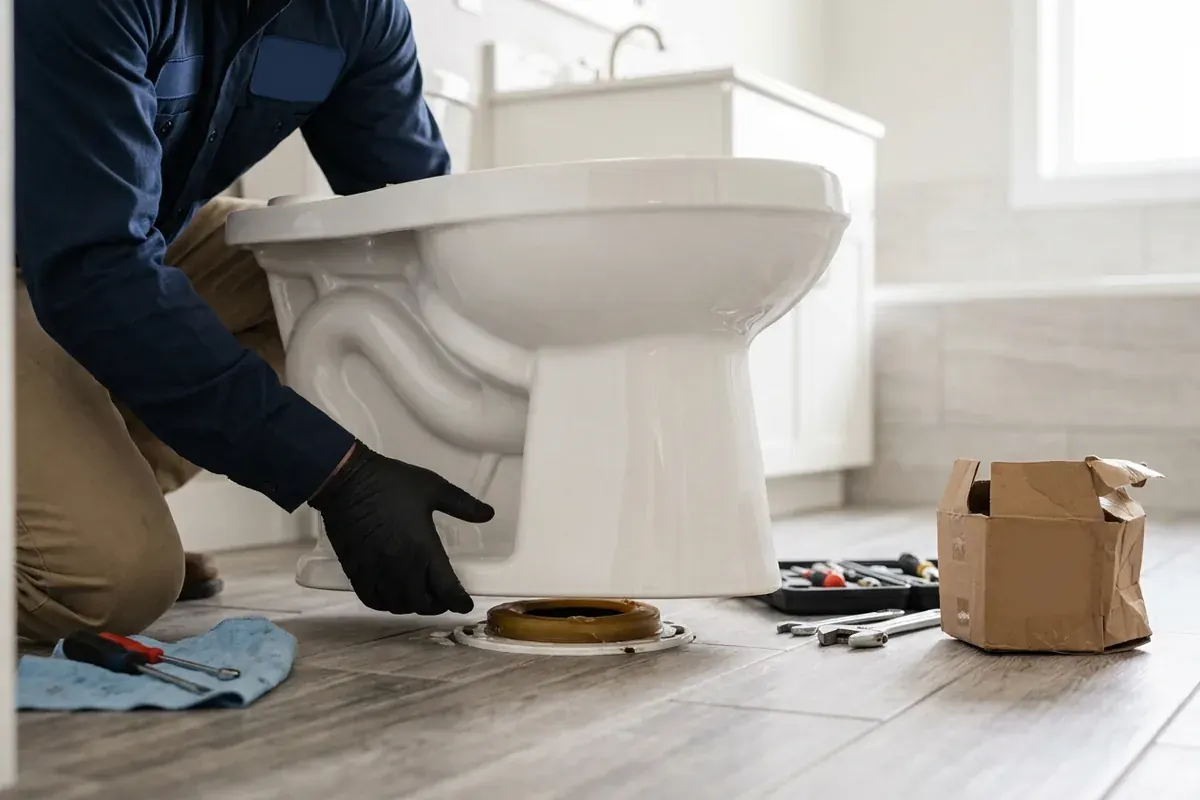
Measure the rough-in before you buy anything
Rough-in is the distance from the finished wall behind the toilet to the center of the drain flange. Twelve inches is the common number, and 10 and 14 inch rough-ins turn up in older bathrooms and remodels. A bowl built for 12 inches will not sit squarely over a 10 inch flange, and the tank will end up crooked against the wall.
Measure to the wall surface, then to the center of the two closet bolts. If baseboard sits behind the toilet, subtract its thickness. Write the number on the box before you leave the store.
- Bowl shape: round fits tight spaces, elongated gives about two inches more seat length and projects farther into the room.
- Tank label: check the gallons per flush stamped inside the tank, since it affects how well the bowl clears.
- Bowl height: standard and comfort height differ by a few inches, and the choice is yours.
- Supply connection: a 3/8 inch compression shutoff is typical, but confirm what is on your wall.
The flange decides how hard this job will be
The flange is the ring on the floor that the bowl bolts to and that the wax ring seals against. It should sit on top of the finished floor or flush with it, not sunk below a new layer of tile or vinyl. A flange that is too low leaves a gap the wax cannot fill, and that gap is where slow leaks begin.
Look for cracks, rust-eaten metal and slots that no longer hold the closet bolts. A cracked plastic or cast flange can sometimes take a repair ring, but one that has rotted loose from the floor needs real repair work.
Also check the floor around it. Press a screwdriver tip into the wood beside the flange, and if it sinks in easily the subfloor is wet or rotted and the toilet should not go back on top of it.
The swap in order
Shut off and empty
Close the quarter-turn valve on the wall, flush, then sponge the last water out of the tank and bowl. Disconnect the supply line over a towel because a cup of water is still in it.
Lift out the old bowl
Remove the two nuts at the base and rock the bowl gently to break the wax seal. Lift with your legs since many toilets weigh 60 to 100 pounds, and set it on cardboard.
Clean the flange and set the new seal
Scrape off old wax, stuff a rag in the pipe to block sewer gas, and fit the new closet bolts. Place the wax ring on the flange, or on the horn of the bowl, but not both.
Lower, bolt, connect, test
Lower the bowl straight down onto the bolts, press with your body weight, then tighten the nuts a little at a time. Connect the supply, open the valve slowly and flush several times.
Alternate between the two base nuts in small turns. Cranking one side down fully is how porcelain cracks, and a cracked base cannot be repaired.
Leveling, shimming and the dry-tissue leak test
Set a small level across the bowl rim, then front to back. If the floor is uneven, plastic shims under the bowl fix it, and you trim them flush once the toilet is tight. Do not tighten the bolts to pull a rocking toilet flat, because that stresses the porcelain.
After the first flushes, dry the base and the supply connection, then wrap a square of toilet tissue around each joint. Check it again after an hour. Any damp spot at the base means the wax seal failed, and the toilet has to come up again before the water reaches the subfloor.
Parts that make or break the job
| Part | What it does | What to look for |
|---|---|---|
| Wax ring | Seals the bowl outlet to the flange | Fresh ring sized for your flange, with a horn only if the flange sits low |
| Closet bolts | Anchor the bowl to the flange | Brass or stainless, set in the flange slots and square to the wall |
| Supply line | Carries water from the valve to the tank | Braided stainless, long enough to avoid a tight bend |
| Shutoff valve | Isolates the toilet for repairs | Closes fully and does not weep at the stem |
| Fill valve and flapper | Refill the tank and seal it between flushes | Usually pre-fitted, but test the flush before you leave |
Reusing the old wax ring or an old, stiff supply line is the most common cause of a repeat leak.
Hand the job to a licensed plumber when you find this
Flange below the floor, cracked or loose
A repair ring or a flange replacement is plumbing work, and a poor repair leaks under the floor where you cannot see it.
Soft or stained subfloor
Rot around the base means a long-running leak. The wood has to be dealt with before any toilet goes back on top.
A shutoff valve that will not close
Forcing a seized valve can break it and leave you without a way to stop the water. Shutting the main is the fallback.
Moving the toilet to a new spot
A new location needs a new drain and vent path. That belongs under plumbing installation, not a weekend swap.
Slow drain behind the toilet
If the bowl was sluggish before the swap, a new bowl will not fix a clogged line. Our toilet repair and installation team can check the drain first.
How a toilet installation quote is built
We give a clear price before work starts, and the price follows the conditions at the toilet, not just the fixture. Here is what moves it.
- Who supplies the toiletA customer-supplied bowl is installed as is. A bowl we supply adds the fixture to the total, and sizing the rough-in correctly is part of that choice.
- Flange and floor conditionA sound flange is a quick connection. A broken flange or a repaired subfloor adds parts and time.
- Shutoff valve and supply lineReplacing a worn valve while the water is off is cheaper than doing it as a second visit.
- Old toilet haul-awayDisposal of a heavy porcelain bowl adds labor if you want it removed from the property.
- Access and floor typeTight alcoves, tile floors and second-floor bathrooms change the handling and the setup.
Insurance rarely covers a planned fixture swap. A leak that has already damaged a floor is a different case, so call your insurer before repairs begin on that.
Describe your toilet and flange, and we will tell you what the job involves.
(253) 275-5116Toilet work under Lakewood and Washington rules
Washington enforces the 2021 Uniform Plumbing Code with state amendments, in effect statewide since March 15, 2024. If you buy a bowl at a big-box store, the labels and installation instructions are written to that code, so follow them rather than a video from another state.
The City of Lakewood says it is not a full-service permit agency, and its older building FAQ says a permit is required before installing, altering, repairing or replacing a plumbing system. Whether a like-for-like toilet swap counts is a question to settle with the city permit center before you start.
Anyone doing plumbing work for hire in Washington must be certified by the state Department of Labor and Industries. You can check a plumber on L&I's online verify tool before you let anyone into the bathroom.
Source type: state agency rule and city building FAQ.Where we send a plumber for toilet installs
We dispatch to homes across Lakewood, and the same crews work the nearby towns of University Place and Steilacoom. If you live in DuPont or Fircrest, the call works the same way: tell us the rough-in and what you found at the flange.
What the rules say about the toilet you buy
Federal rules cap new toilets at 1.6 gallons per flush, and many models carry the EPA WaterSense label at 1.28 gallons or less. Check the rough-in distance before you shop, because the toilet has to fit it.
The Uniform Plumbing Code (UPC), 2021 edition, is the code Washington enforces, so if the drain or vent needs changes, that work may call for a permit.
Questions people ask before swapping a toilet
For a straightforward swap with a healthy flange, expect one to two hours for a first-timer. Add time if the old bolts are rusted solid or the floor needs patching.
No. Wax compresses into the shape of the old seal and will not reseal reliably. A new ring costs little compared with the damage from a leaking joint.
The floor is probably uneven or the flange sits too low or high. Shim the base, and if it still moves after the bolts are snug, the flange needs a look.
Dry everything and use tissue to find the wet spot. Water at the base points to the wax seal, while drips at the tank bolts or supply fitting are usually a tightening or washer fix.
The city's building FAQ says a permit is required for installing or replacing a plumbing system, and it is an older document. Call the city permit center and ask whether a fixture swap in your bathroom is covered.
Yes. Tell us the model and your measured rough-in so the right parts are on the truck, and we will quote the labor before work starts.