Five signs roots are in the line
- Gurgling in other fixturesAir pushed along a partly blocked pipe bubbles up through toilets and tubs.
- Slow drains in several placesOne slow sink is local. Several slow fixtures point to the main line.
- A clog that returns within weeks or monthsRoots regrow quickly after a plain cable pass.
- Sewage odor outdoorsA smell near the cleanout or yard can mean a cracked or open joint.
- Patches of greener, faster grass over the lineLeaking wastewater feeds the lawn above it, a clue worth noting next to the other signs.
None of these alone proves roots. Together they make a strong case for a camera inspection before anyone starts cutting.
Why a wet climate keeps roots busy
NOAA's 1991 to 2020 normals for the Tacoma Narrows Airport station show about 42 inches of precipitation a year. That's nearby, not in Lakewood itself, but it describes the region. Soil stays damp for much of the year, and roots grow toward the moist, nutrient-rich air around a sewer joint.
Practically, that means a root problem isn't a one-time event. A line that was cleared can need another look within a year or two if a large tree stands nearby, so keep your last camera footage for comparison.
Cutting, jetting or repairing: how to choose
| Approach | What it does | Trade-off |
|---|---|---|
| Mechanical root cutting | A spinning cutter on a cable shears roots inside the pipe | Fast, but roots regrow |
| Hydro jetting | High-pressure water clears roots and scrubs the pipe wall | Needs a sound pipe and a cleanout |
| Spot repair | Digs up and replaces a cracked or offset section | Fixes the entry point |
| Pipe lining | A resin liner seals the inside of the pipe | Not suited to collapsed or badly offset pipe |
A camera inspection tells you which of these actually applies.
Cutting buys time. Roots that entered through a joint will return unless that joint is sealed or replaced. If the camera shows only light hair roots, clearing and a scheduled follow-up may be enough.
When roots have split the pipe or pushed it out of alignment, repair is the honest answer. Our sewer line repair team compares dig-and-replace with lining based on what the footage shows.
What the camera shows you
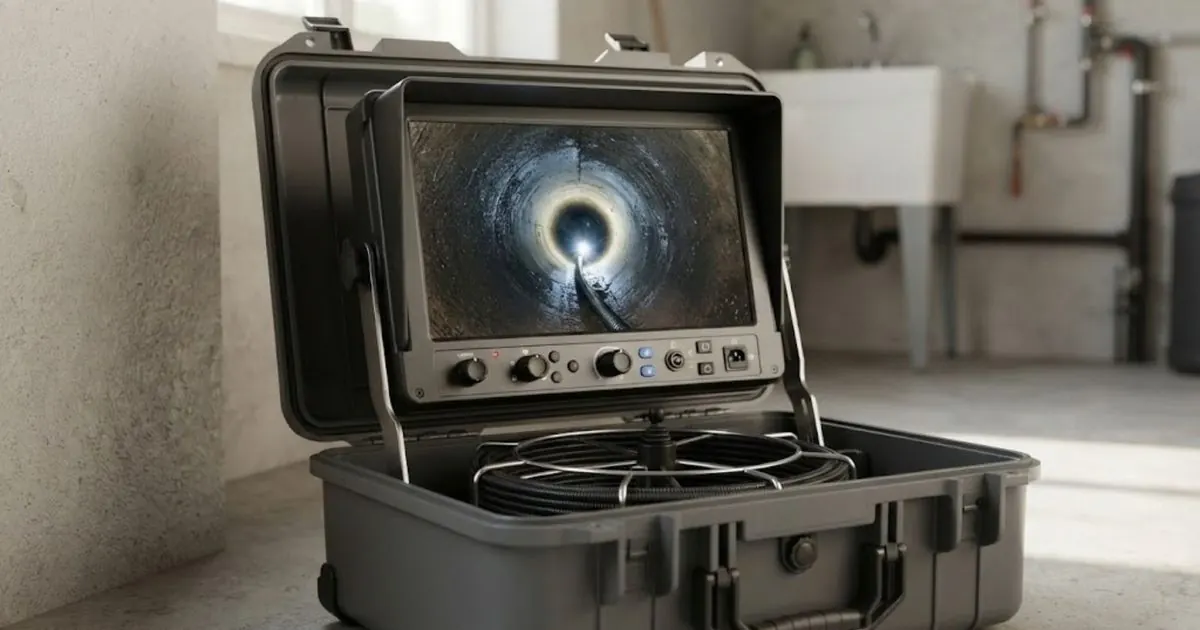
A sewer camera is a small waterproof lens on a flexible cable. It runs through the cleanout and sends live video, so you see the pipe the same moment the plumber does. Hair roots look like white fuzz at a joint. Heavy intrusion looks like a mass filling much of the pipe.
The footage answers the questions that decide the work: where the roots enter, how far the damage runs, whether the pipe is offset and whether it is cracked. Our sewer inspection service records the pass so you can keep it for later comparison.
What not to do
Reasonable steps
- Locate your cleanout and keep it accessible
- Note which fixtures gurgle or back up
- Save any camera footage you receive
Skip these
- Copper sulfate or rock salt flushed down toilets
- Repeated chemical drain openers
- Planting new trees over the sewer path
Root-killing chemicals are sold widely, but a pour-in product rarely reaches the roots at the joint. If it sits in a blocked pipe, it also becomes a hazard for whoever opens the line next.
Who owns the problem in Lakewood
Sewer service in Lakewood is almost entirely provided by Pierce County Public Works and Utilities. The county says the homeowner is responsible for the sewer line from the home to the public lines. A root blockage in that stretch is yours to clear and repair.
If repair means digging, ask about the side sewer permit. The process runs through the county's online permitting system, the county reviews it, issues the permit, then county Planning and Public Works inspects the work. Plan for that step before you schedule the excavation.
Source type: county utility guidance.Keeping roots from coming back
- Get a camera look after any root clearing, so you know the pipe's condition.
- Ask whether a joint, not just the roots, needs repair.
- Schedule a follow-up pass if the pipe can't be sealed.
- Choose planting spots away from the sewer path, and favor shallow-rooted plants near it.
- Keep the cleanout cap on and the area around it clear.
Between visits, notice the early signs rather than waiting for a full backup. A gurgle now is cheaper to deal with than a floor drain overflowing later.
How a root job gets quoted
Root work has no standard price because the line, the trees and the damage all differ. A clear price comes after the camera shows what's there.
- Length and depth of the affected runLonger or deeper lines take more time and equipment.
- MethodCutting, jetting, spot repair and lining are priced differently.
- AccessA working cleanout saves labor.
- Excavation and restorationDigging adds permits, backfill and surface repair.
- Camera workInspection is its own step and you choose whether to add it.
Insurance rarely covers root intrusion as a maintenance issue, but sudden backup damage may fall under optional coverage. Read your policy.
Call and we'll price it before work starts.
(253) 275-5116Coverage beyond the city line
Our licensed plumbers take root calls in Lakewood and nearby, including DuPont and Fircrest. Properties in other towns may use a different sewer provider, so the permit steps above can differ.
Root questions we hear
They can enter through loose joints and cracks. Solid modern pipe with tight joints resists them better, but no material is fully immune.
Removing a tree stops new growth, but roots already in the pipe stay and can regrow from the stump for a while. The pipe still needs clearing and checking.
It varies with the tree, the season and how open the joint is. Plan a camera recheck rather than assuming the line is fixed.
According to Pierce County, the homeowner maintains the sewer line from the home to the public lines. If the camera shows the blockage is in the public main, we'll show you the footage.
Lining is usually done through an access point and needs little excavation. It only suits pipe that hasn't collapsed or shifted.