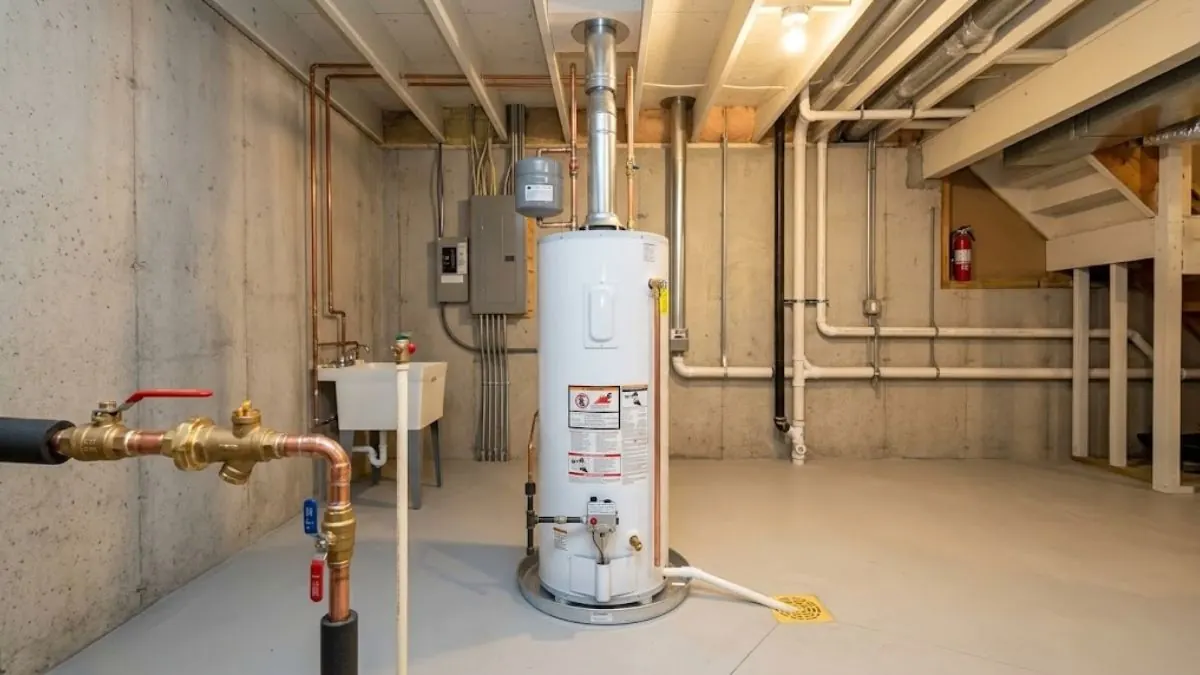
Who can reasonably do this and who should not
A handy person with a helper, a free afternoon and a like-for-like electric tank swap is the realistic DIY candidate. The new heater goes in the same spot, uses the same connections and needs no changes to venting or gas piping.
| Your situation | Reasonable to try | Call a licensed plumber |
|---|---|---|
| Electric tank, same location | Often, with a helper | If wiring or fittings look worn |
| Gas tank heater | No | Always, because of gas and venting |
| Moving the heater or changing size | No | Piping and venting change |
| Corroded valves or stiff old unions | Risky | Fittings may break when turned |
| Tankless conversion | No | New venting, gas line and sizing |
These are general guidelines. Your own home may add reasons to call.
The job at a high level
This is an overview, not a manual. Read the instructions that come with your specific heater and follow them over anything written here.
Shut off power and water
At the breaker for an electric unit, and at the cold supply valve on top of the tank. Open a hot tap upstairs so the tank can drain.
Drain the tank
Attach a hose to the drain valve at the bottom and run it to a floor drain or outside. Expect hot water, so wait until it has cooled.
Disconnect and remove
Undo the supply lines and the relief valve piping, then take the old tank out. A full tank can weigh several hundred pounds, so drain it first and use a hand truck.
Set, connect and refill
Place the new tank, reconnect with new flexible lines, fill it fully with a hot tap open, and only then restore power.
That last order matters. Switching an electric element on while the tank is empty burns it out within seconds.
Where DIY swaps go wrong
Gas and combustion
A gas heater needs correct venting and a leak-tight gas connection. A mistake can leak gas or push exhaust into the house. This is the line where we say call a pro.
Relief valve piping
State code says the relief valve discharge piping may not have isolation valves and may not discharge into the heater pan. A shortcut here defeats a safety device.
Seismic strapping
Washington's code amendments require heaters to be strapped against horizontal movement, with straps in the upper and lower thirds of the tank. The lower strap sits at least 4 inches above the controls.
Old fittings that break
Corroded shutoffs and brittle unions can snap when you turn them. Suddenly you have a plumbing repair on top of a water heater job.
If you smell gas at any point, leave the building first. Call PSE or 911 from outside, and do not use switches or your phone inside.
Relief valve and strapping: the two details people skip
The temperature and pressure relief valve is the part that opens when the tank gets dangerously hot or pressurized. The pipe running from it should point downward and end where hot water can't hit anyone. Never cap it, plug it or add a shutoff.
Strapping is the other detail. A tank that tips in an earthquake can tear its own gas or water connections loose. Two metal straps anchored to the framing are cheap compared with that outcome, so plan them into the job rather than adding them later.
What Lakewood homeowners should check first
The city's building FAQ says a permit is required for installing or replacing a water heater, with an inspection scheduled about a day ahead. That FAQ is an older document, so confirm the current process with the city permit center before you buy anything. Skipping the permit can come back when you sell the home.
Anyone doing plumbing work for hire in Washington must be certified by the state Department of Labor and Industries. That rule covers paid work, and the L&I online verify tool lets you check a plumber's certification before you hire. Ask for it, because a heater swap by an uncertified installer leaves you holding the risk.
Source type: city building FAQ and state agency rule.What drives the cost of a swap
A DIY swap saves labor, but it isn't free of cost. You still pay for the heater, fittings, straps, a permit and possibly a haul-away. A professional quote is built from the same pieces plus the plumber's time.
- Fuel type and sizeGas, electric and tankless units price very differently, and larger tanks cost more.
- Venting and gas workChanges to flue or gas piping add parts and labor.
- Code itemsStraps, relief valve piping and a pan are part of a proper install.
- AccessA heater in a tight attic or crawlspace takes more handling.
- Permit and haul-awayPermit handling and removal of the old tank are separate line items.
Ask any installer to list these items so you can compare quotes fairly. If your heater is under a manufacturer's coverage, read the terms before touching it.
We give a clear price before work starts.
(253) 275-5116Coverage if you decide to hand it off
When a heater swap is not a weekend project for you, our team handles water heater replacement and new water heater installation with licensed plumbers. We cover Lakewood and send crews to neighbors in University Place and Steilacoom as well.
Code and permit points before you start
Washington enforces the Uniform Plumbing Code (UPC), 2021 edition, which covers relief valve piping and tank strapping. The city's building FAQ says replacing a water heater needs a permit, so confirm current steps with the city permit center.
If your unit burns gas, the gas connection is where a mistake turns dangerous. Leave that part to a licensed professional.
Questions about doing it yourself
The state certification rule applies to plumbing work done for hire. Permit requirements are separate, and the city's building FAQ says a permit is needed to replace a heater, so confirm with the permit center first.
Plan on a full afternoon for a straightforward electric swap, longer if the tank needs time to drain and cool. Surprises like seized valves can stretch it into a second day without hot water.
Yes. A tank is awkward even when empty, and stairs make it worse. A second person also watches for leaks while you test the connections.
We'd say no. Gas connections, venting and combustion air all have to be right, and a mistake can leak gas or exhaust. Call a licensed plumber for any gas unit.
State code requires straps and a proper relief valve discharge pipe in any Lakewood home. Past that, your layout decides whether a pan, new shutoffs or a drain run are needed.