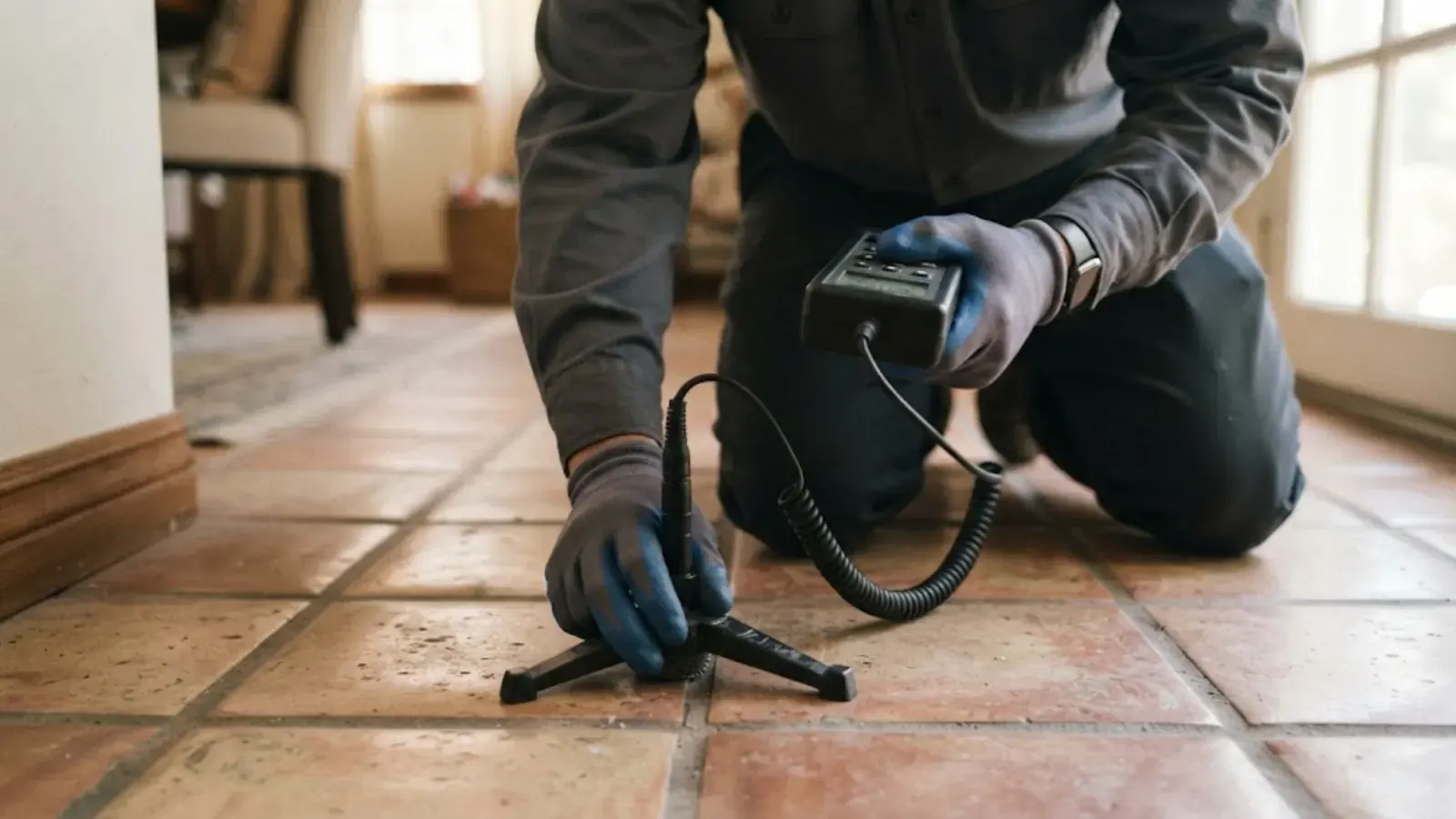
What the detection fee covers
The fee is for locating the leak, not for fixing it. A good detection visit ends with a marked spot or a clear statement of where the leak is and how far along the line it sits.
- Isolating the systemShutting sections of the plumbing off to see which part is losing pressure.
- Choosing the methodMatching the tool to the pipe: listening, thermal imaging, camera or gas.
- PinpointingMarking the exact spot so a repair opens one small area instead of a large one.
- ReportingTelling you what was found, what was ruled out and what repair comes next.
Methods and when each one fits
| Method | What it does | Best for |
|---|---|---|
| Pressure test | Holds water pressure on a section and watches for a drop | Confirming a leak exists in a line |
| Acoustic listening | Picks up the sound of escaping water through ground or floor | Pressurized lines under slabs or yards |
| Thermal imaging | Shows temperature differences behind walls and floors | Hot water lines and wet building materials |
| Moisture meter | Reads dampness in drywall, wood or flooring | Mapping the size of the wet area |
| Pipe camera | Looks inside drain lines | Drain and sewer leaks |
Few jobs need all of these. Often two methods agree, and that is when the plumber marks the spot.
What moves the price of a leak detection visit
We give a clear price before work starts, after talking through what you have seen. Hidden leaks do not come in a standard size, so the number follows the job.
- Where the pipe runsA wall leak with open access is quicker than a line buried under a driveway or slab.
- How many methods it takesTwo methods to confirm a spot means more time on site.
- Access and obstructionsFurniture, tile, landscaping or a locked crawlspace adds time.
- Size of the propertyLonger runs of pipe take longer to isolate and test.
- Time of the callAfter-hours visits are staffed around the clock and priced before anyone arrives.
Many homeowners policies cover water damage from a sudden leak but not the cost of finding or repairing the pipe itself. Some include limited coverage for tear-out. Read your policy and ask your insurer before work begins.
Describe the damp spot or the high bill and we will explain the next step.
(253) 275-5116Checks you can do before you call
- Turn off every faucet and appliance, then read your water meter.
- Wait 30 minutes without using water and read it again.
- Add a few drops of food coloring to each toilet tank and wait without flushing.
- Look for warm spots on the floor, musty smells or paint that is bubbling.
If the meter moves with everything off, you have a leak and the next question is where. If it does not move, the issue is likely a fixture, an irrigation valve or something else on the usage side. Our leak detection team can narrow it from there.
Leaks in Lakewood: where the meter divides the problem
In Lakewood Water District, the customer's responsibility starts at the customer side of the water meter. Pipes from the meter to the building are the homeowner's to maintain and repair, while the shutoff valve at the meter is utility-owned. If you are not sure who serves your address, check your bill, since Parkland Water District and Summit Water and Supply Company also serve parts of the area.
That helps you decide where to look. A leak on the street side of the meter is a utility matter, and a leak between the meter and the house is yours. A buried leak there often points to the water service line, which is its own kind of repair.
Source type: Lakewood Water District customer information.What happens after the leak is found
Locating the leak is half the job. The repair may be a small patch on a copper line, a section of pipe replaced, or a full line replaced if the pipe is worn out in several places.
Whether opening the wall or the ground requires a permit depends on the work. The city's building FAQ says a permit is required before repairing or replacing a plumbing system, so confirm with the city permit center before work starts.
Leak detection cost questions
Often, yes. A hidden leak wastes water around the clock and can rot framing before you see it. The fee is usually less than the damage from months of seepage.
Detection is designed to avoid that. Instruments narrow the spot first, and any opening is small and placed where the leak is, not guessed.
Often yes, using pressure testing and acoustic listening, though access and pipe type affect the result. A plumber should tell you how confident the finding is.
No, they are priced separately. You get the finding first and a clear price for the repair before anything starts.