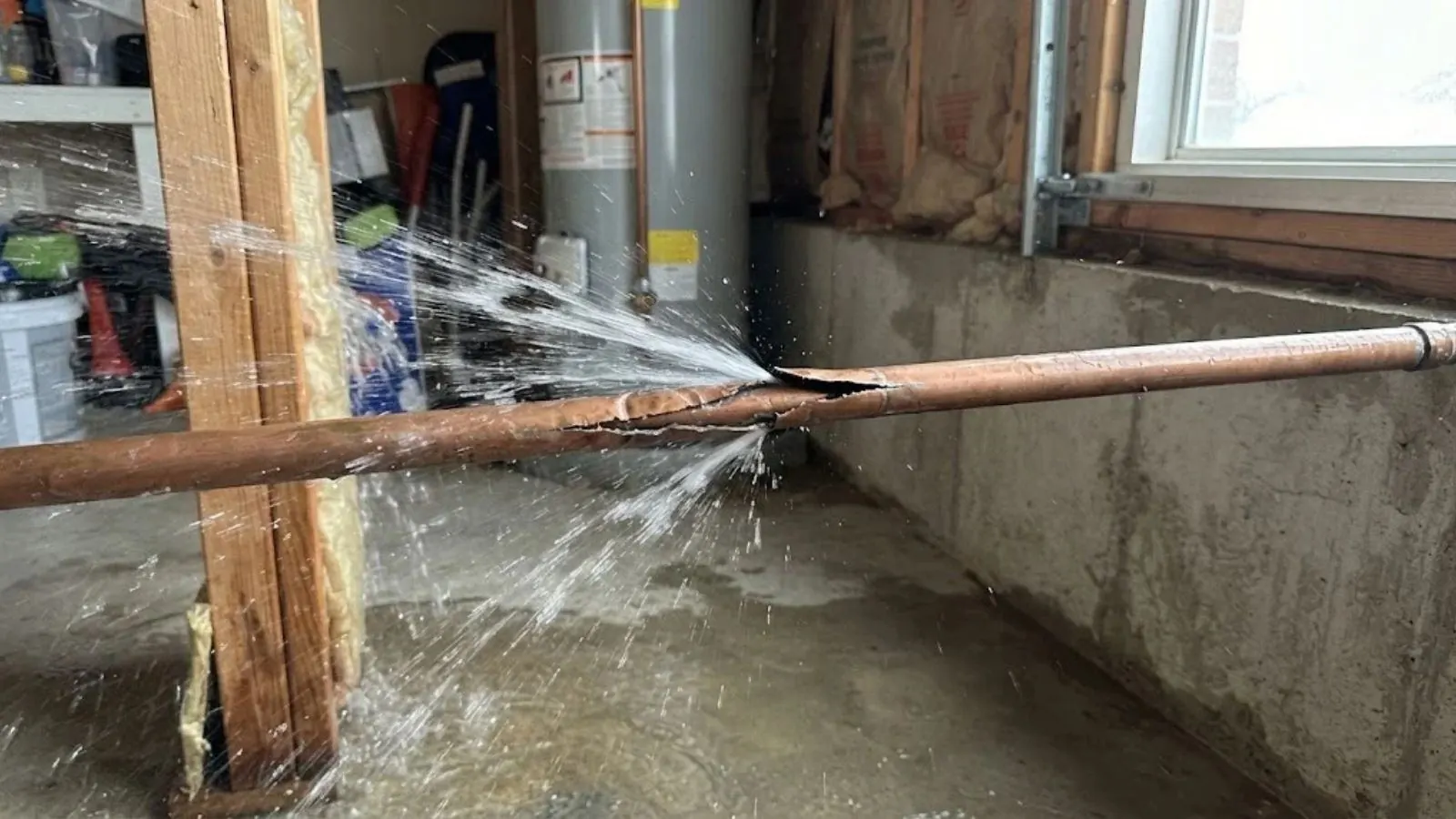
If a pipe has burst, do this first
- Shut off the main water valve. Know where it is before you need it.
- Switch off power to flooded areas only if you can reach the breaker without standing in water.
- Open the lowest faucet to drain remaining water.
- Move belongings away, take photos and call us.
If the shutoff at your house won't turn, Lakewood Water District offers a 24-hour emergency shutoff at the meter, and emergency shutoffs carry no fee. Call us, and we can help you decide what comes next.
Before the freeze: prepare the house
- Find and test the main shutoffTurn it off and on once so you know it moves.
- Protect exposed pipesWrap pipes in garages, crawlspaces and exterior walls with foam sleeves.
- Disconnect hosesRemove garden hoses and cover outdoor faucets.
- Let one faucet dripA thin stream on the farthest tap keeps water moving.
- Open cabinet doorsLet room heat reach plumbing on cold exterior walls.
- Keep the heat onDon't set the house below the mid-50s degrees F while away.
How cold Lakewood actually gets
NOAA's 1991 to 2020 normals at the Tacoma Narrows Airport station, which is nearby and not in Lakewood, show 21.4 days a year with a low at or below 32 F. January's average low is 36.4 F. That sounds mild, but the average hides the short cold snaps that freeze pipes.
The practical lesson is that prep is cheap and rare freezes still do damage. A November 1985 cold spell broke pipes, snow in January 2012 caused major damage across the county, and arctic cold arrived again in January 2024. Treat any forecast of several nights below freezing as your cue.
Buried lines face a different measure. The City of Lakewood's 2022 design criteria set 12 inches as minimum frost depth, so shallow service lines, outdoor spigots and exposed runs are the weak points.
Source type: weather service normals and city design criteria.Thawing a frozen pipe safely
Signs of a freeze: a faucet that gives a trickle or nothing, frost on a pipe, or a bulge in the line. Keep the tap open so water can flow as the ice melts.
Find the frozen section
Usually a pipe along an exterior wall, in a crawlspace or near the foundation.
Warm it gently
A hair dryer on low, warm towels or a heating pad work well.
Work toward the faucet
Start nearest the tap and move back along the pipe.
Check for leaks
Once water flows, look along the pipe for splits.
If you can't find the freeze or the pipe looks split, close the main and call. Water returning through a cracked pipe is how damage starts.
Never do these
Safe
- Hair dryer on low
- Warm, wet towels
Never
- Open flame such as a torch or lighter
- Boiling water poured on pipe
- Leaving a heat source unattended
Open flame can ignite framing and damage fittings. A pipe may be cracked long before it thaws, so thawing can turn a hidden split into a spray.
Pipes that freeze first
Freezes rarely start in the middle of a warm house. They start where cold air meets water: pipes in crawlspaces, garage walls, outdoor spigots, sprinkler supply lines and runs along north-facing exterior walls.
Homes with plumbing in unheated spaces or with gaps around pipe penetrations are the ones that need attention first. Sealing small air leaks around where pipes enter the wall with caulk or spray foam costs little and helps a lot.
- Crawlspace and basement pipes near vents
- Kitchen and bath lines on exterior walls
- Outdoor faucets and irrigation backflow assemblies
- Water heater supply lines in unheated garages
When a thaw becomes a repair
A split pipe may only show once the ice melts and pressure returns. Look for wet drywall, a sagging ceiling, a hissing sound or a water meter that keeps moving with everything off.
Our burst pipe repair crews cut out the damaged section and replace it. If you can't see where water is escaping, leak detection finds the source without opening walls blindly.
What drives the cost after a freeze
Costs vary with the damage, so a clear price comes after we see it.
- Pipe material and sizeCopper, PEX and others repair differently.
- Number of splitsOne crack differs from several.
- AccessPipes in walls or ceilings need openings.
- Water damageDrying and repairs are separate from plumbing.
- After-hours workEmergency calls are priced before we come out.
Homeowners policies often cover sudden bursts but not slow leaks. Photograph everything and call your insurer.
We give a clear price before work starts.
(253) 275-5116Reach
We handle freeze calls across Lakewood and in University Place, Steilacoom, DuPont and Fircrest.
Freeze questions
Look near where the water line enters the house, often in a garage, basement, crawlspace or utility closet. The utility's meter shutoff is separate and belongs to the utility.
A brief dip may not freeze pipes inside heated space, but exposed lines in garages and crawlspaces can. When several nights run cold, dripping is cheap protection.
Closing the main and draining lines reduces damage if a pipe fails while you're away. Keep some heat on regardless.
We don't have a count. The Pierce County hazard record notes the February 2019 snowfall of 6 to 12 inches, which is a reminder to prepare before snow arrives.
Yes. Ice blocks the pipe and pressure builds between the ice and a closed faucet, and the pipe splits there.